If you’re thinking about buying your first electric car, you’re probably wondering what it will cost to charge at home. This guide puts the numbers into everyday terms, from the cost of driving 100 miles to what charging could add to your monthly electricity bill.
A jump in petrol or diesel prices can make you look twice at what it costs to drive. An electric car may cost more to buy than a comparable petrol or diesel model, but the cost of running it matters too. If you can charge at home, how do the numbers stack up?
Most of us have a feel for what it costs to fill a tank. We see the price every time we pass a petrol station, and the total appears on the pump when we fill up. Electricity is less visible. If you’re considering your first EV, you may have no idea what you pay per unit at home, let alone what that means for a night’s charging or a month’s driving.
So let’s turn those unfamiliar numbers into costs you can picture.
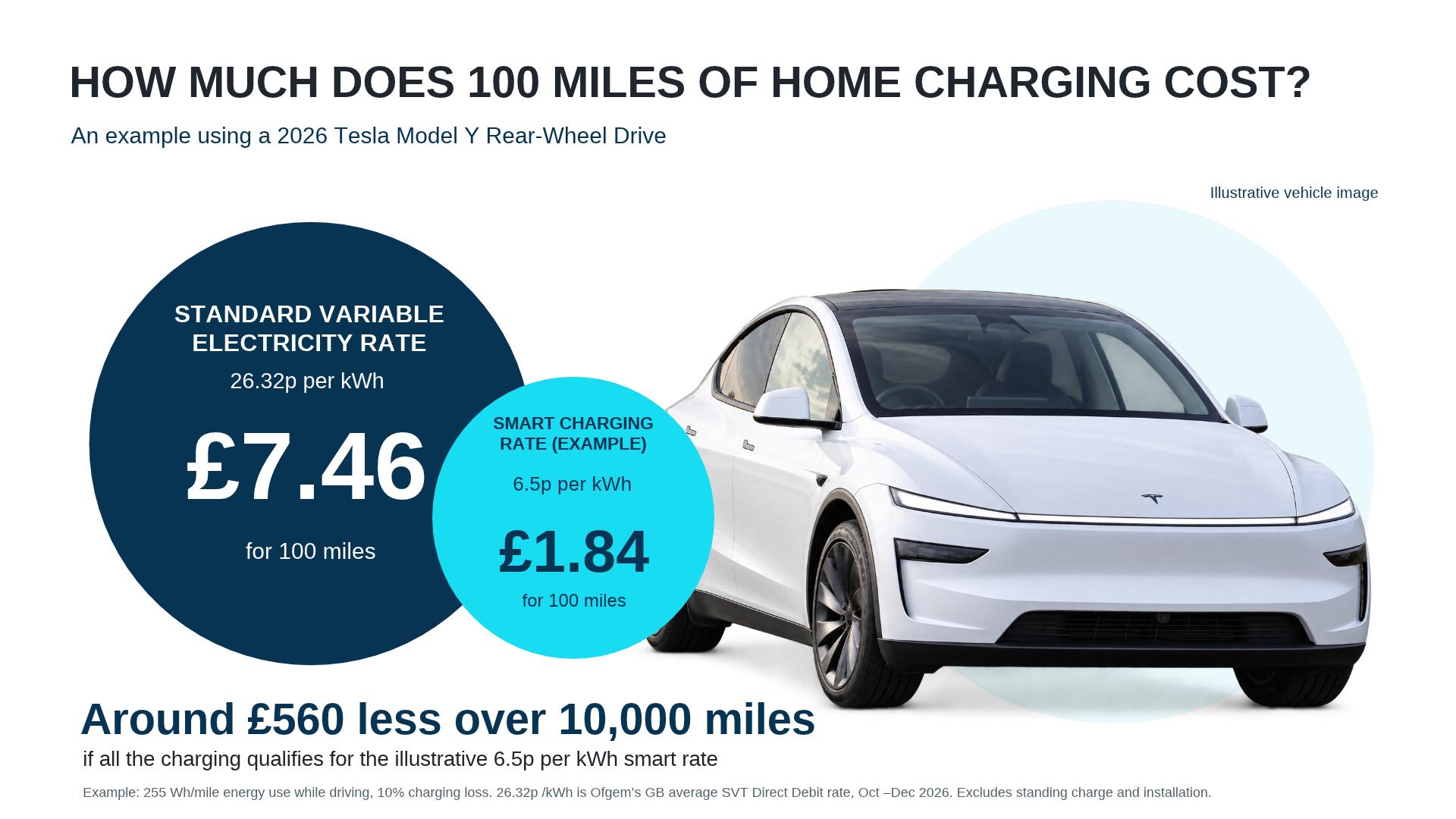
Let’s take the Tesla Model Y, the UK’s bestselling new electric car in 2025. Using Ofgem's average standard variable electricity rate, charging it at home for 100 miles of driving would cost about £7.46, or 7.5p a mile.1
But there is a way that you may be able to get home charging even cheaper. Many first-time EV buyers may not know about smart EV tariffs. These let your energy supplier schedule charging when it can offer a cheaper price. For example, charging the same Model Y using the Intelligent Octopus Go electricity tariff would cost about £1.84 for 100 miles, or 1.8p a mile.2
You’re unlikely to wait until the battery is empty before plugging in. For our Tesla Model Y example, topping up from 20% to 80% would cost about £10.53 on a standard variable tariff, or £2.60 at a 6.5p/kWh smart EV tariff rate.3
If you drive 10,000 miles a year in our Tesla Model Y example, home charging would cost about £746 on a standard variable tariff. If all your charging was using a Smart EV tariff, it would cost about £184 — a difference of around £560 a year.4
That compares the cost of charging the car. It doesn’t mean switching tariffs would cut your total household electricity bill by £560. The price you pay for electricity used elsewhere in your home matters too.
At 10,000 miles a year, the charging in our example works out at roughly £62 a month on the standard variable rate, or £15 a month if charging using a Smart EV tariff such as Intelligent Octopus Go where the current rate is 6.5p per kWh.5
Charging at home adds to your electricity use, but it may replace what you spend on petrol or diesel. To see what switching means for your spending, compare both sides.
Your costs will depend on how much electricity your car uses, how far you drive and what you pay for electricity. Check your electricity bill for your price per unit, and look up your car’s estimated electricity use. A car that uses more electricity per mile than our Model Y example will cost more to charge.
Also remember that you buy a little more electricity than ends up in the battery. Some is lost during charging. We’ve allowed for that in all the examples above.
The Model Y example shows how much cheaper charging can be when using a Smart EV tariff. Before switching, check whether the offer would save money across your home and car together:
Here are four Smart EV tariffs to help you start comparing. They work in different ways, so their advertised charging prices aren’t a like-for-like comparison of your total bill.
The tariff you choose is only part of the picture. If you’re buying your first home charger, check that it works with the smart EV tariffs you’re interested in and suits the way you’ll charge day to day.
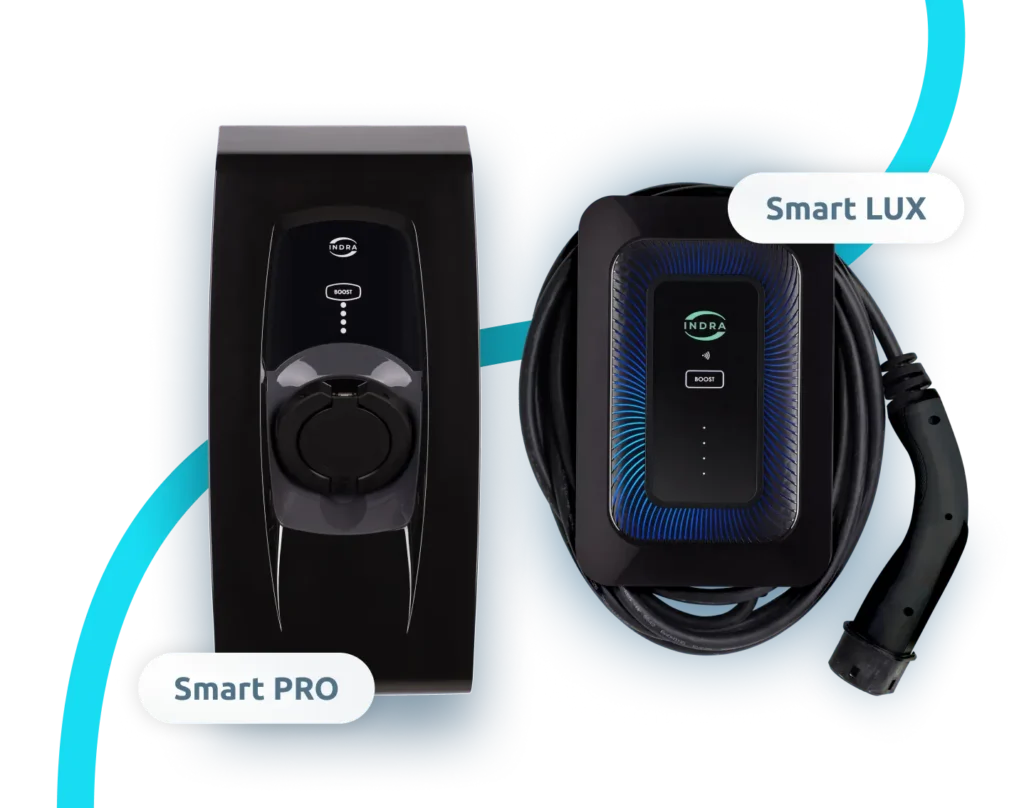
Indra’s Smart LUX and Smart PRO chargers give you a choice of built-in cable or socketed design, with support for all of the smart EV tariffs listed in this article. Compare our two chargers to see which would work best for your home.