Around nine in ten EV drivers say they would not return to petrol or diesel. We examine the evidence and five practical reasons—from running costs and reliability to driving experience, battery life and range.
Many motorists have concerns about cost, charging, range and battery life before moving to an electric vehicle. Yet survey after survey finds that, once people make the switch, the overwhelming majority do not want to return to petrol or diesel.
That may seem surprising. EV ownership initially brings unfamiliar decisions: charging at home instead of visiting a filling station, understanding electricity tariffs and planning charging stops on longer journeys. But experience appears to change perceptions. This article examines the evidence—and the practical benefits that help explain why so few drivers want to go back.
Ask people who already drive an EV whether they would go back to petrol or diesel, and survey after survey produces much the same answer: the overwhelming majority would not.
The Department for Transport’s EV Driver Behaviours and Attitudes Tracker found that nine in ten people who had switched to an EV would not go back to petrol or diesel.
Other research reveals an even stronger preference for electric. In EVA England’s 2025 survey, 98% of 1,279 fully electric drivers said they would never turn back to petrol or diesel.[1] Zapmap’s 2025 survey produced a strikingly similar result: only around 3% of the 3,976 fully electric drivers surveyed said they wanted to return to a petrol or diesel car.[2]
These surveys use different questions and methodologies, so the percentages are not directly comparable. Nevertheless, the pattern is remarkably consistent: once people experience electric driving, very few want to reverse their decision.
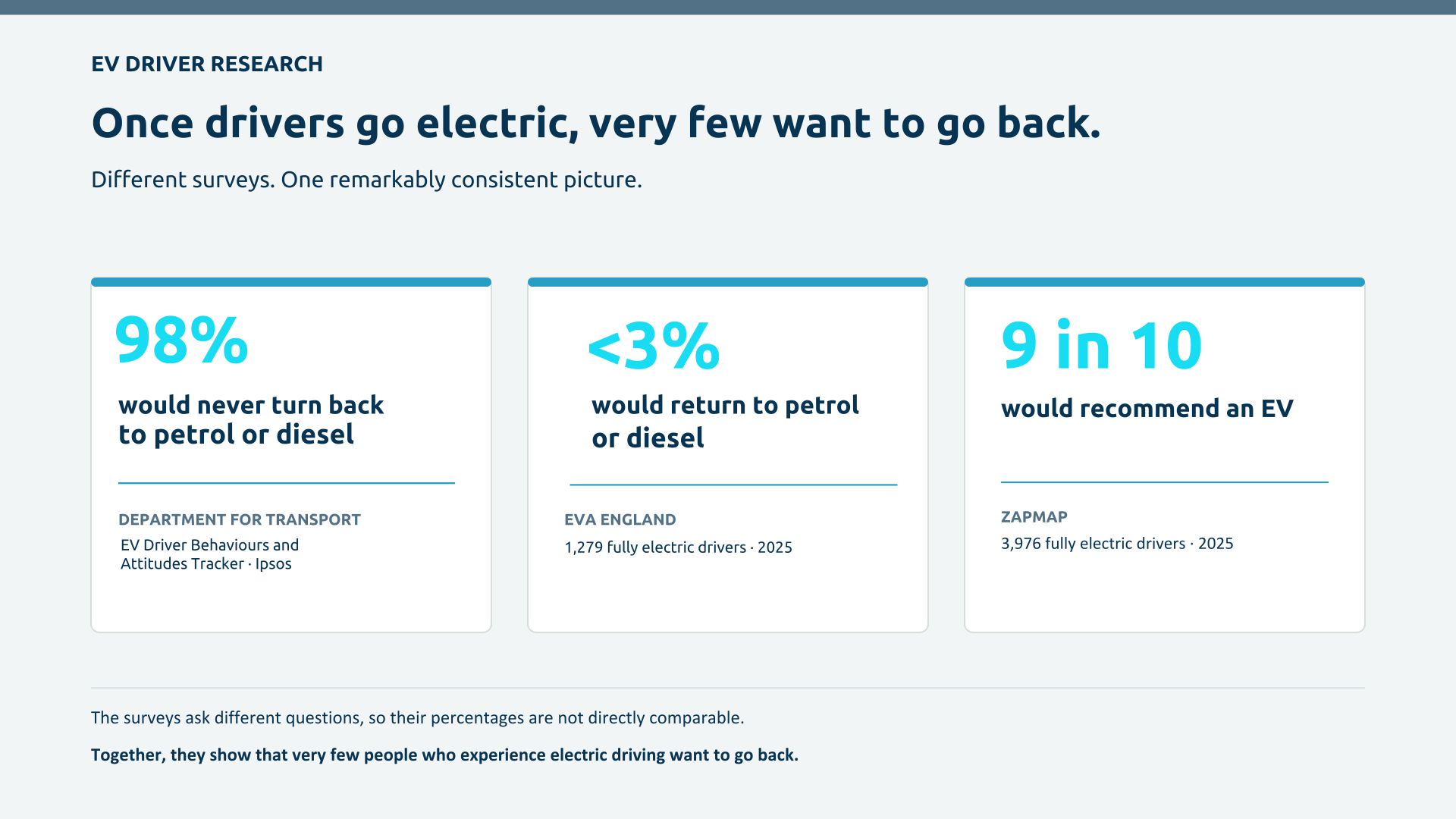
That message reached a much wider audience in January 2026, when the government launched its 'Get That Electric Feeling' campaign.[3] Alongside highlighting the nine-in-ten 'wouldn't go back' finding, the campaign cites research that around nine in ten EV drivers would recommend making the switch.

No single factor explains this level of satisfaction. The research instead points to five overlapping reasons.
Analysis published by Carbon Brief in June 2026 estimated that the average UK battery-electric car driver was saving more than £1,100 a year in fuel costs compared with running a petrol car.[4]
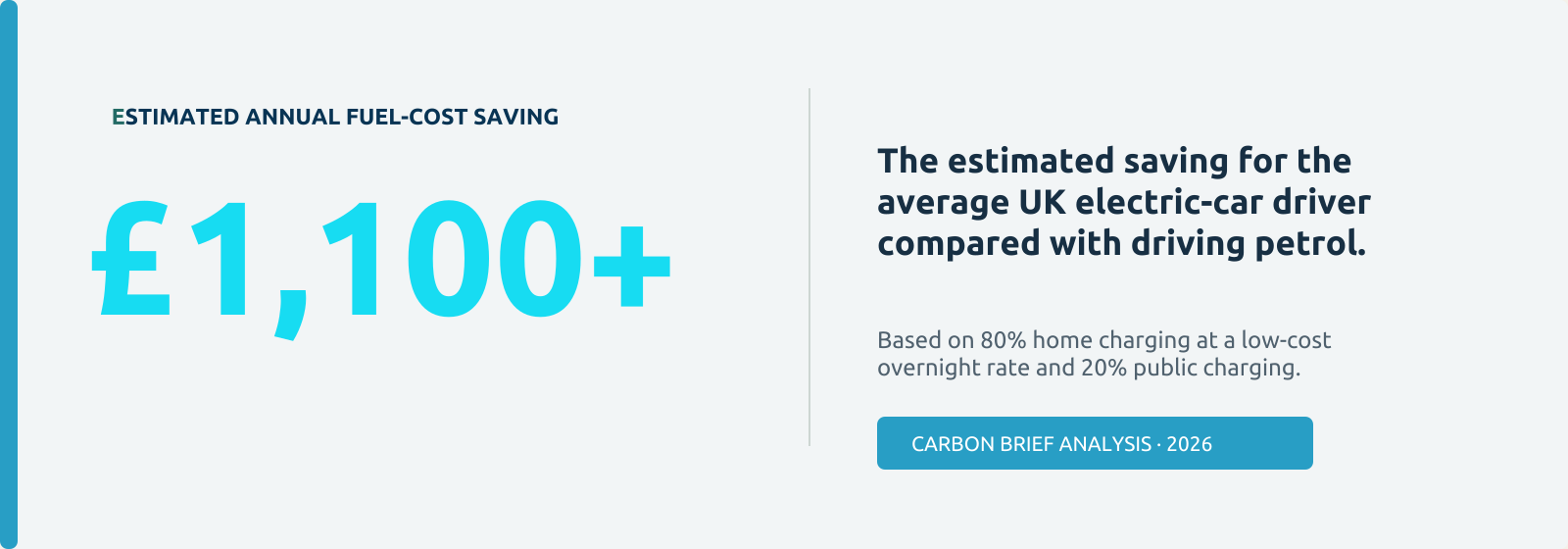
The calculation reflects a realistic charging mix: 80% at home on a low-cost overnight tariff and 20% on the public network. For drivers charging entirely at home, the estimated saving rises to around £1,400 a year.
Energy-market consultancy Cornwall Insight reached a similar conclusion in an analysis published in April 2025.[5] It estimated that covering 7,000 miles would cost an EV driver approximately £630 a year when charging at home under the standard energy price cap, compared with £1,432 for petrol—a saving of around £800. The estimated saving increased to as much as £1,240 when charging at home on a specialist off-peak EV tariff.
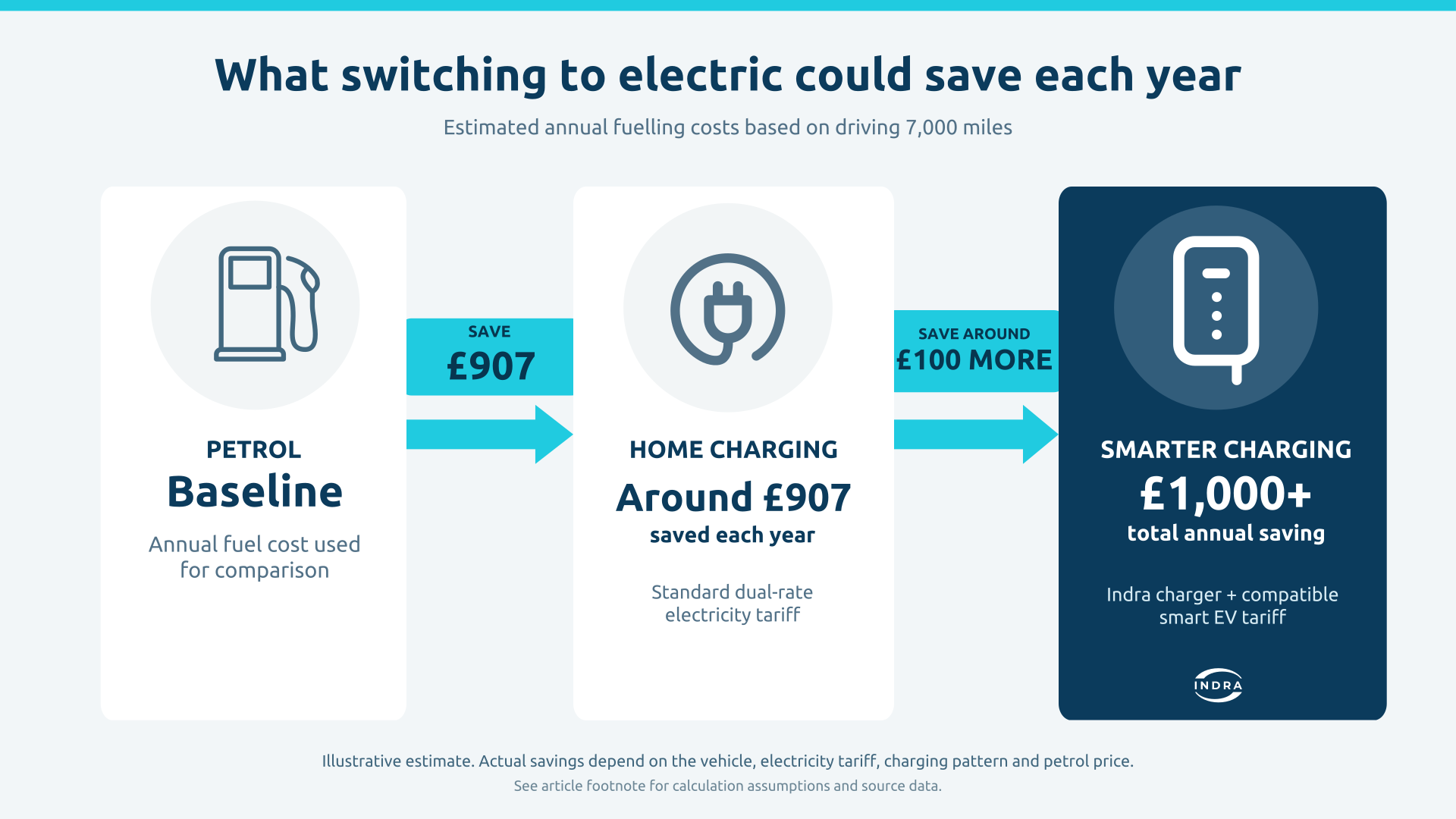
Here at Indra, we’ve done our own sums—and reached a similar figure. Based on driving 7,000 miles a year, we estimate that switching from petrol to electric could save around £907 a year when charging at home on a standard dual-rate tariff. With a smart EV tariff and a compatible charger, such as one from Indra, that saving could rise to more than £1,000 a year.[6]
Drivers’ experiences support these calculations. EVA England’s 2025 survey found that 93% considered their EV cheaper to run than a petrol or diesel equivalent, while 83% described their running costs as “much lower”.[1]
Savings vary with mileage, vehicle efficiency, electricity prices and charging habits. They are generally greatest for drivers who can charge at home overnight, while frequent use of expensive rapid public charging can substantially reduce the advantage. Even so, returning to petrol or diesel would mean accepting noticeably higher everyday driving costs for many owners.
Electric cars appear less likely than petrol or diesel models to leave their drivers stranded at the roadside.
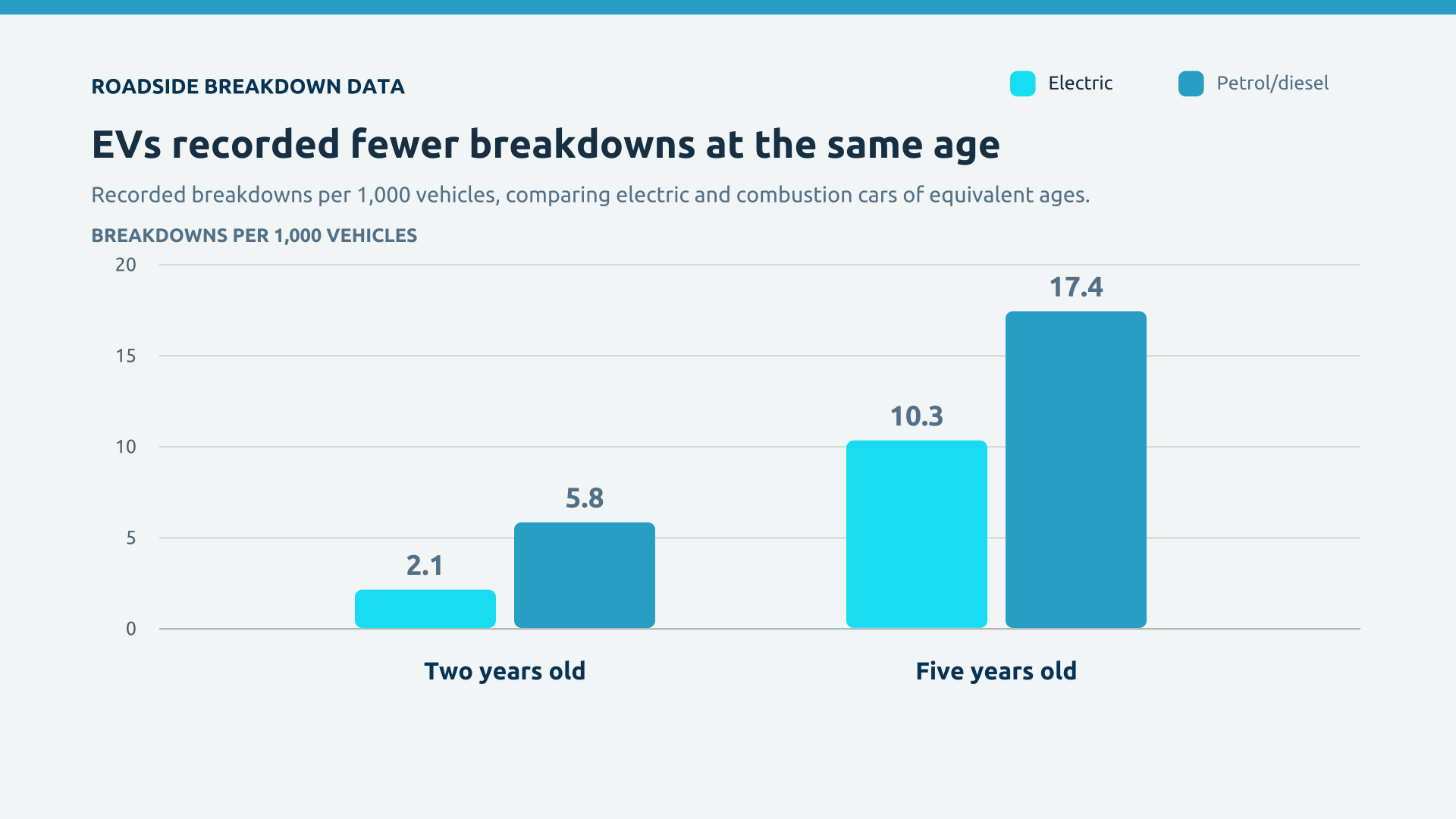
Compelling evidence comes from ADAC, Europe’s largest breakdown organisation. Its 2026 analysis calculated breakdowns per 1,000 registered vehicles, ensuring that the comparison was not distorted by the smaller number of EVs on the road. It also compared electric and combustion-engine cars registered in the same years, avoiding the further distortion caused by petrol and diesel cars being older on average.[7]
As the chart below shows, EVs broke down less frequently in every age group examined. Among two-year-old cars, the breakdown rate was almost two-thirds lower than for petrol and diesel models. Among five-year-old cars, it was around 40% lower.
UK drivers’ experiences support the ADAC breakdown data. A 2026 study commissioned by Octopus Electroverse and Auto Trader surveyed 11,573 UK drivers and found that EV owners were almost twice as likely as petrol or diesel drivers to describe their car as reliable.[8]
One reason may be their greater mechanical simplicity. EVs do without components such as clutches, exhausts and fuel systems, along with complex engine lubrication and ignition systems. That removes several potential points of failure.
Electric cars can still develop faults, of course, and reliability varies between manufacturers and models. Software, charging systems and 12-volt batteries can all cause problems. But for many owners, fewer breakdowns mean greater confidence in their car—and one less reason to return to petrol or diesel.

Electric motors deliver immediate torque, producing smooth, rapid acceleration without waiting for an engine to build revs or a gearbox to change gear. Less engine noise and vibration can also make everyday driving feel quieter and calmer.
Research from Octopus Electroverse and Auto Trader found a marked difference between what petrol and diesel drivers expected from an EV and what EV drivers actually experienced:
EV drivers commonly described electric cars as “responsive”, “relaxing”, “easy” and “convenient”.[8]
Zapmap’s 2025 survey supports these findings: 70% of 3,976 fully electric drivers identified better vehicle performance as an important reason for owning an EV, up from 65% the previous year.[2]
Driving experience is subjective, of course, and individual cars vary. Even so, the consistency of the findings suggests that smoothness, responsiveness and quietness become everyday benefits that many drivers would be reluctant to give up.
Prospective buyers often worry about an EV losing a substantial amount of range or eventually needing an expensive replacement battery. However, a growing body of real-world evidence suggests these concerns are often overstated.
The UK’s largest study of EV battery condition, the Generational 2025 Battery Performance Index, analysed more than 8,000 electric cars from 36 brands. It included vehicles up to 12 years old and examples with more than 160,000 miles on the clock. Among cars aged eight to 12 years, median battery capacity was still 85%—comfortably above the 70% level commonly used in battery warranties. Cars with more than 100,000 miles recorded battery-health figures of between 88% and 95%.[9]
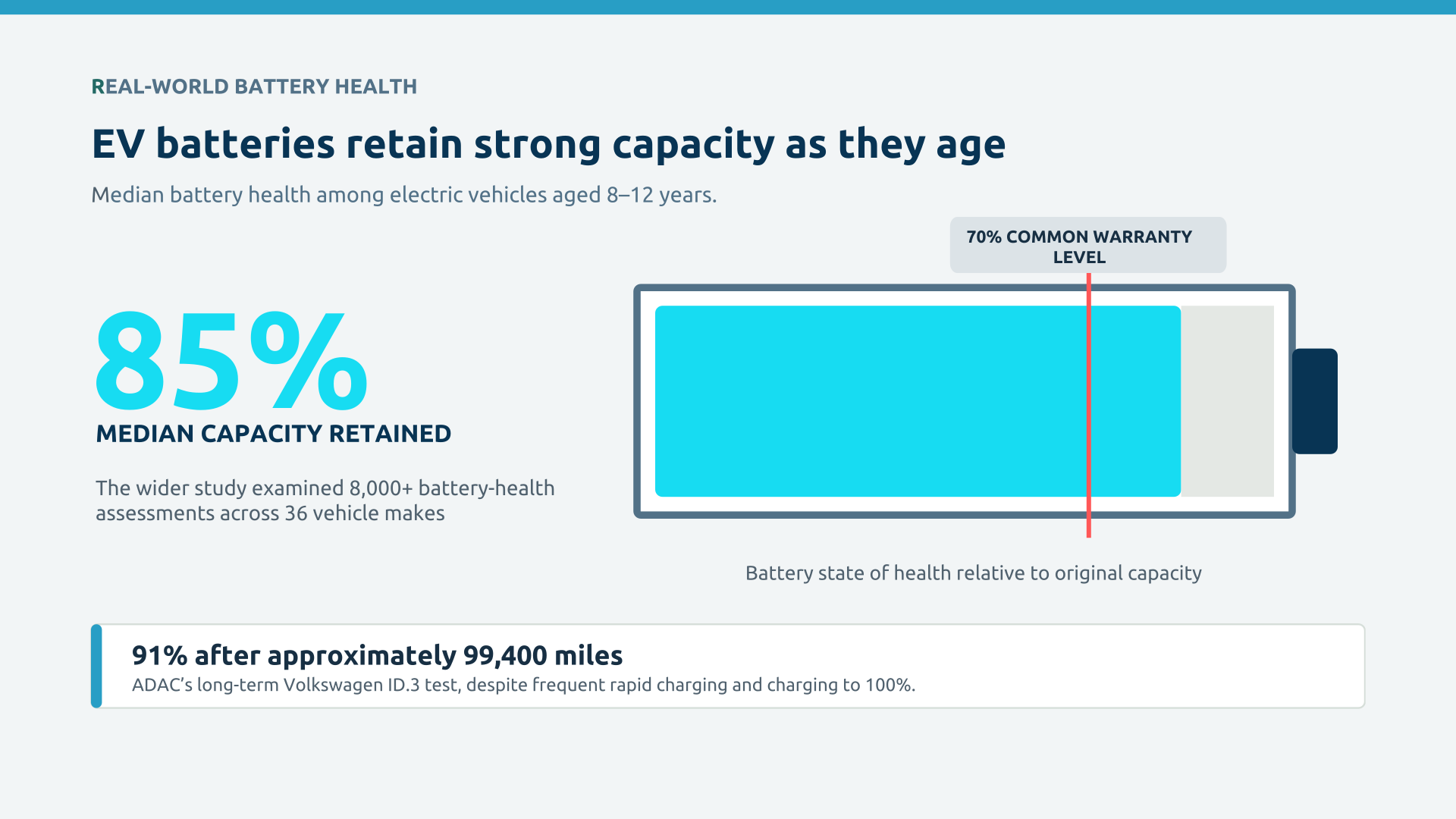
A long-term test by German motoring organisation ADAC produced a similarly reassuring result. Its Volkswagen ID.3 recorded an average battery state of health of around 91% after more than 160,000 kilometres—approximately 99,400 miles—despite being regularly charged to 100% and rapid-charged considerably more often than a typical privately owned car. Volkswagen guarantees at least 70% of the battery’s original net capacity after eight years or 160,000 kilometres, whichever comes first.[10]
Battery condition varies according to vehicle design, battery chemistry, temperature and charging habits, so a battery-health check is still sensible when buying a used EV. Nevertheless, the evidence suggests that degradation is generally gradual—not the sudden and costly failure some drivers fear.
Range is a common concern among prospective EV buyers. Evidence from people already driving electric suggests that it does not disappear completely, but generally becomes more manageable once drivers understand their car’s capabilities and establish a charging routine.
The Department for Transport’s EV Driver Tracker found that, among drivers who had used only a fully electric vehicle during the previous six months, 89% would be most likely to choose one for a journey of 100 miles or more.[11] This suggests that experience gives most owners sufficient confidence to use their EV for more than everyday local journeys.
That confidence also appears to grow over time. Shell’s 2026 survey of more than 8,850 drivers found that 62% of European EV drivers worried less about running out of charge than they had a year earlier.[12] Meanwhile, AA roadside data provides a useful measure of what happens in practice: only 1.85% of EV breakdowns in 2024 were caused by the vehicle running out of charge, approaching the approximately 1% of petrol and diesel breakdowns attributed to running out of fuel.[13]
Improving vehicle range is helping too. The average range of a new fully electric car available in the UK reached 239 miles by April 2026, while more than 40 models offered an official range exceeding 300 miles.[14] For context, the Department for Transport’s travel data shows that the overwhelming majority of car journeys are far shorter than this.
Range will still require consideration for drivers making frequent long journeys, towing or relying heavily on public charging. But the evidence suggests that most EV owners do not regularly experience the problems they initially fear. As drivers become familiar with their vehicle—and as the ranges available continue to increase—range anxiety tends to give way to range confidence.
For many EV owners, convenient and affordable home charging is a big part of what makes switching to electric work so well.
Indra’s smart EV chargers help you charge at lower-cost times, access compatible smart EV tariffs and make use of energy generated by home solar panels—all managed through the Indra app.
[1] Steer the Conversation, EVA England Survey Report 2025.
[2] Zapmap Annual Charging Insights Report, 2025.
[3] Get that Electric Feeling, UK Government, 2026
[4] Carbon Brief Analysis, 'UK EV drivers are now saving £1,100 each a year - and £3bn in total', 2026
[5] Cornwall Insight, Switching to an EV could save drivers up to £800 a year in refuelling costs, 23 April 2025.
[6] Based on switching from a SEAT Ateca 1.5 TSI EVO SE 5-door to a Kia Niro 2 and driving 7,000 miles annually. Petrol costs use the UK average unleaded pump price of 150.53p per litre for the week commencing 13 July 2026, published by the Department for Energy Security and Net Zero. Home-charging costs compare the E.ON Next Flex Economy 7 Midlands Direct Debit night rate of 13.788p/kWh with the Intelligent Octopus Go smart-charging rate of 8p/kWh. Calculations assume approximately 41.3mpg for the SEAT Ateca and annual electricity consumption of 1,825kWh for the Kia Niro. Actual costs and savings vary according to vehicle efficiency, mileage, region, tariff, charging losses and charging behaviour. Standing charges are excluded. Data updated 17 July 2026.
[7] ADAC Breakdown, Breakdown Statistics 2026: The Winners and Losers. April 2026
[8] Octopus Electroverse & Autotrader, The EV Tipping Point: Perceptions vs Reality, May 2026
[9] Generational, 2025 Battery Performance Index: Industry Benchmark Report, published February 2026
[10] ADAC, ADAC endurance test: ID.3 reaches its battery-warranty mileage, 15 July 2025. See also Volkswagen, ID.3 battery impresses in ADAC’s 160,000-kilometre endurance test, 15 July 2025.
[11] Department for Transport and Ipsos, Electric Vehicle Driver Behaviours and Attitudes Tracker: Year 1 findings, September 2025, pp. 26–27.
[12] Shell, Shell survey shows EV experience improving, but drivers yet to switch remain cautious, 29 June 2026. The Shell Recharge Driver Survey received 8,850 responses across nine markets; 62% of European EV drivers said they worried less about running out of charge than a year earlier.
[13] The AA, AA EV Viewpoint, 10 March 2025. Based on AA roadside-assistance data for 2024; 1.85% of EV breakdowns resulted from running out of charge, compared with approximately 1% of combustion-engine breakdowns caused by running out of fuel.
[14] UK Government, Get an electric vehicle, updated 28 April 2026, citing EV Database data correct on 29 April 2026. The page reports an average new-electric-car range of 239 miles and more than 40 models quoting ranges above 300 miles.