
In this article, we examine some of the possible solutions for drivers of EVs to charge when their property doesn't have access to off-street parking in a driveway or garage.
Around 32.8%, or roughly 9 million households, in the UK don’t have access to a driveway. That means that a huge number of UK drivers face higher EV charging fees compared to those who charge at home. And, of those who already own an electric vehicle (EV), approximately 20% don’t have a home charger.
With the progress towards electrification and the higher costs of public charging, installing home chargers is clearly the most efficient and cost-effective way to manage day-to-day charging needs.
But what do people who live in apartments or terraced homes do to access home charging and the savings it brings?
This article will explore some practical, real-world solutions to the challenge of charging access, so let’s dive in!
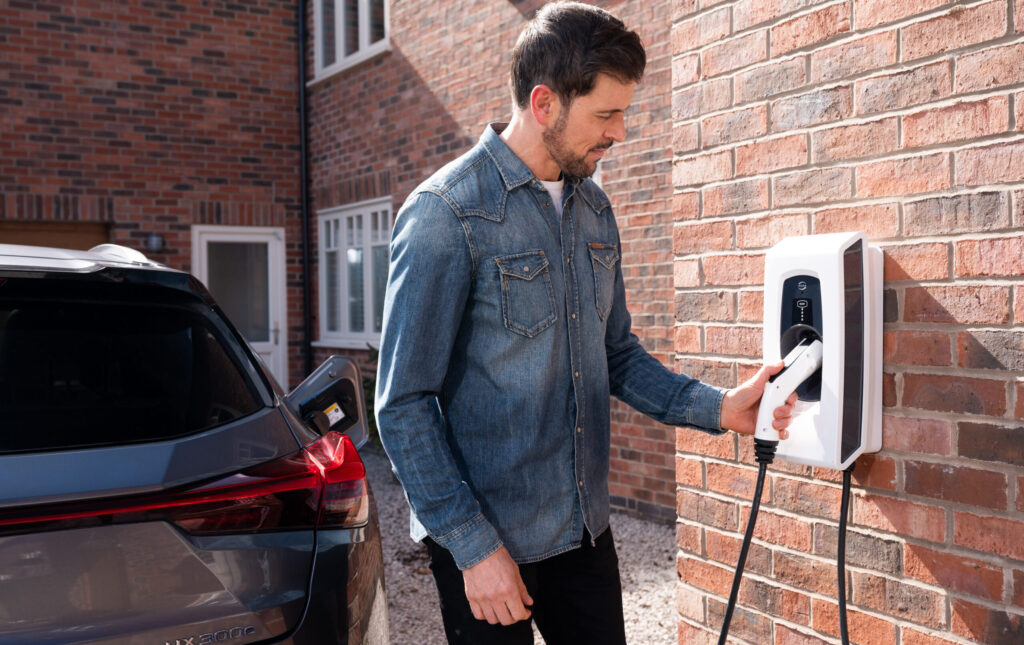
There are many rapid and fast EV charging points at supermarkets, car parks, service stations and other public places. Apps such as Zapmap can help EV drivers locate, reserve and plan their charging by route or location. The current total has reached over 85,000 as of the end of August, with over 1,000 being added monthly.
Pros: Very reliable and a growing network means more choice and options
Cons: Generally, more expensive and tends to require a higher level of planning for journeys than traditional petrol, diesel or even hybrid vehicles.

Many employers are now offering EV charging as a perk, either free or heavily discounted, to encourage staff to make the switch to electric driving. Many companies now offer salary sacrifice schemes and benefit from tax incentives when leasing EVs or installing workplace chargers, which reduces benefit-in-kind tax, and supports employee adoption.
Pros: Tax incentives and grants are available for companies, and staff can charge their cars whilst working. This is especially valuable given the UK’s energy price increases and rising costs of public charging.
Cons: Not ideal as the primary method for charging, as working from home or hybrid working means not being in the workplace for some workers, and there could be issues with the number of chargers being in demand.

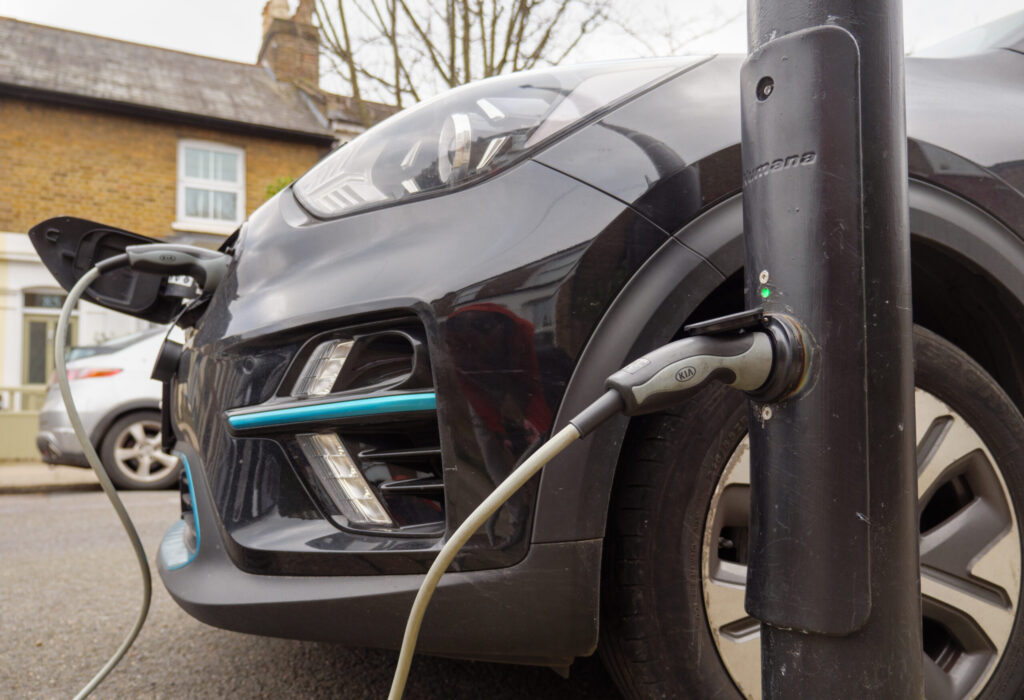
Another increasingly viable option for EV drivers without off-street parking is the use of on-street residential charge points (ORCs). These are located on public streets, typically close to homes. Common types of ORCs include;
Ubitricity (part of Shell) dominates the space with its 100K plus network of lamp post-mounted chargers.
Many drivers use Zap-map as their starting point to find ORCs.
Pros: convenience in charging closer to home and a reduced reliance on more expensive rapid chargers
Cons: availability is still limited in some locations, and demand can exceed supply in densely populated areas, plus the fact that charging speed is slower than rapid alternatives.
Another key to EV charging without a driveway is the rise of urban charging hubs. These are designed a lot like petrol stations but dedicated to EVs. With multiple rapid or ultra-rapid chargers, they can allow several vehicles to power up simultaneously. Similarly, destination charging is increasing with hotels, gyms, restaurants and supermarkets installing chargers to attract customers and offer greater convenience. EV drivers can top up while shopping, dining or exercising.
Pros: EV owners can reduce downtime and recharge with speed, reliability and the ability to combine errands.
Cons: Prices for charging are higher than home charging, and there can be waiting times for chargers at peak times.

There is a rising popularity in innovative solutions such as pavement gullies and overhead charging arms, which provide practical ways for homeowners to charge EVs without a driveway.
Pavement gullies involve installing a discreet channel across the pavement so the charging cable can be safely run from the house to the vehicle without causing a trip hazard, while overhead charge arms are extendable units that allow the cable to be swung at height over the pavement to the car.
Among the companies offering pavement gullies, we are actively partnering with Kerbo Charge, one of several providers of pavement gullies. With the recent government grant, it’s becoming easier than ever to get a cross-pavement solution installed at home. Read more about it in our recent blog.
Overhead charging arms are offered by a small but growing number of companies including We Power Your Car, SGS Energy and ChargeArm.
Pros: Access to cheaper electricity rates by home charging and reduced reliance on public infrastructure.
Cons: Although the number of local authorities that allow cross pavement solutions is increasing, the vast majority of local authorities are yet to approve their use. Ensuring you can always park outside or near your home (which is required to use cross pavement solutions) isn’t always certain in many residential areas.

While not having an off-road parking space might initially seem like a huge barrier to owning an EV, the range of solutions we’ve explained above proves it’s not an impossible one to overcome. Each approach has its own set of pros and cons, with some prioritising speed and convenience, and others offering affordability and accessibility. The key is to find the right mix for your lifestyle, location and budget. It may take some planning and even some investment to begin with, but with ever-expanding infrastructure and new technologies continually appearing, the barriers to EV ownership without off-street parking are disappearing.
The Indra range of smart EV chargers can help drivers access the most competitive and flexible home charging rates when access is achieved, with OVO or Octopus’s smart EV tariffs.
Are you thinking about making the switch to EV driving but worried about the charging conundrum? Check out local charging apps, ask your council about the possibilities and stay tuned to our blog for the latest in EV charging solutions and tips.
 | About the author: Sonya joined Indra in July 2025 as Senior Content and Marketing Executive. She is a content writer with several years of experience who is now using her expertise to help Indra communicate their branding, products, and the benefits of EV driving for both individuals, society and the planet. |