This article explains why an EV charger may pause or stop due to overvoltage (when your home supply rises above the UK limit of 253V)—usually a grid issue, not a charger fault. It outlines the causes, how to spot it, and what to do next, including when to contact your local electricity network operator and how Indra can help.
You pull onto the driveway at the end of a long day, it’s dark and drizzling, and the car needs to be charged. You plug in and press the boost button, and the lights come on, when suddenly – click! - It stops charging and begins flashing red.
Annoying, right?
Don’t panic. In some cases, it’s actually not a fault with your charger or your car - it could be your home’s voltage has risen above the legal limits, and your charger is doing exactly what it must do by law, protecting you, your EV and complying with regulations.
Electricity in your home has a certain “push” behind it – this is called voltage. In the UK, that push is normally about 230 volts (230V).
Voltage naturally rises and falls a little throughout the day. This is completely normal, and the UK electricity supply is legally allowed to vary between 216V and 253V. Anything within that range is considered safe and normal.
However, if the voltage level goes above 253V, it is outside the legal limits - and this is known as overvoltage.
Think of it like water pressure coming from a tap – a little higher or lower is ok, but too much pressure can cause problems. Overvoltage is the electrical version of that.
Overvoltage = the electrical pressure in your home has risen above the legal upper limit of 253V.
It's worth saying that overvoltage is pretty uncommon — but short spikes do happen.
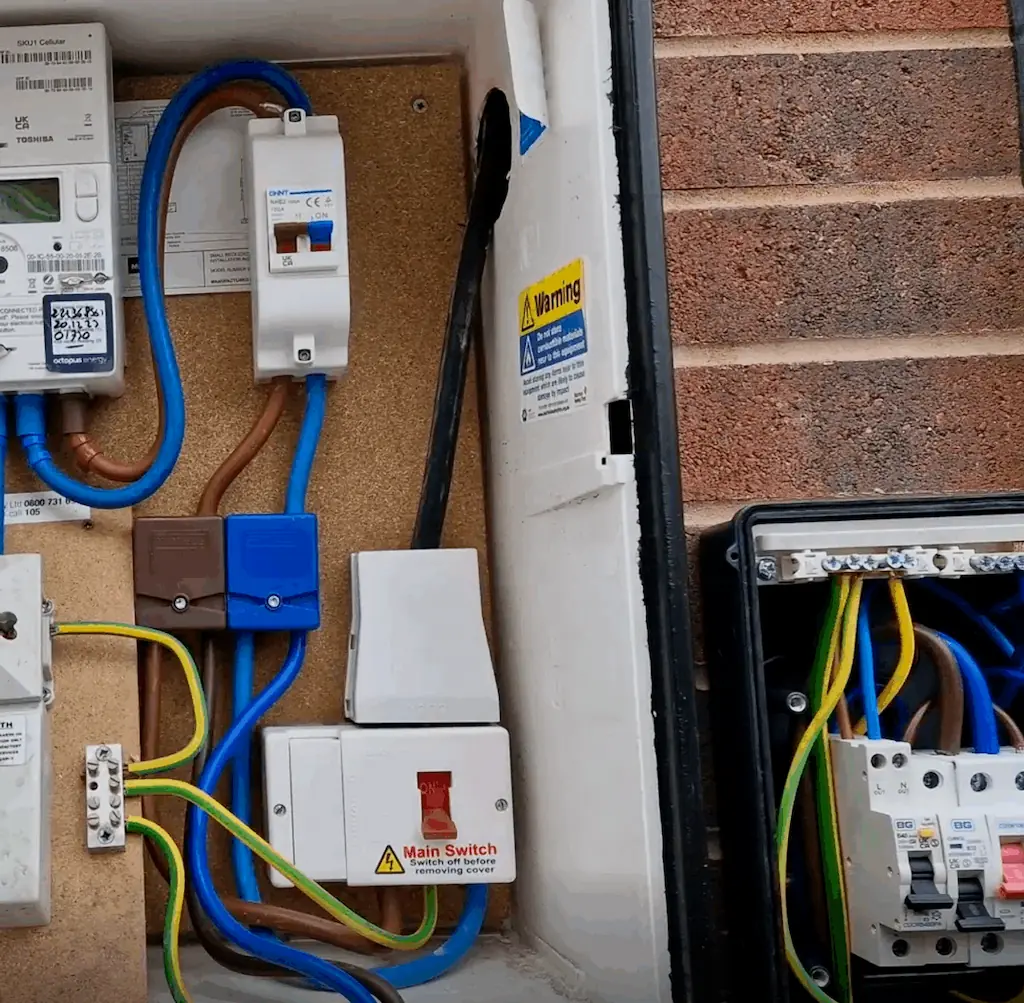
A few everyday things can push voltage above the legal limit:
The voltage levels in your area are maintained by your Distribution Network Operator (DNO), not your electricity supplier or your charger manufacturer. It is the responsibility of the DNO to make sure that voltages stay within the legal range.
As mentioned above, the top of the legal voltage threshold is 253V. When the voltage rises above this level, your EV charger will automatically pause charging. This isn't a fault, it's a built in safety feature requirement set by UK regulations.
Your charger is doing exactly what it's designed (and legally required) to do to protect your EV battery, the charger's internal electronics and your home's electrical system.
Think of it as your charger is saying, “I’m just waiting for the voltage to settle - then I'll get back to work”.
When the voltage returns to a safe level, your Indra charger will simply restart in the mode it was in before the overvoltage incident – so, a scheduled or boost charge.
Because EV chargers, solar PV systems and home batteries are classified as "significant loads" on the grid, they must follow stricter safety rules than other household appliances. These rules - including ENA G98/G99 grid protection rules and BS EN 61851 EV charging standards - state that chargers must continuously monitor the incoming voltage and shut down automatically if it goes outside the legal range.
This is different from other appliances like fridges, ovens and even your tumble driers. Those devices draw far less power and are not subject to the same grid-connection regulation, so they don't automatically switch off when overvoltage occurs.
That said, repeated overvoltage events can still cause wear on household appliances over time. So, if your EV charger frequently pauses due to overvoltage, it may be a sign that there's an issue with the local electricity supply in your street.
Different brands of chargers have their own ways of showing when an overvoltage occurs.
With an Indra charger, you will see the illuminated Indra logo or primary LED status light on the charger flashing red. If you’ve got one of our Smart LUX chargers, you will also see red turbine lights for a few seconds, but with both the PRO and LUX models, the logo will continue to flash red.

If you are using the Indra app, you may have an in-app notification saying, “Charger unplugged” and then very probably shortly afterwards a “Charger plugged in” notification.
When the overvoltage episode ends, the flashing red light will stop, and the charger will recommence charging. The light on the charger should automatically change back to green (scheduled charge), blue (boost charge) or white (charger is ready). All of this may well be only a matter of minutes.
If the lights stay red, are solid red (not flashing), or if the charger is repeatedly impacted by overvoltage issues, it may indicate a more significant power supply issue in your area. Read on to discover what you should do in this scenario.
If you occasionally get ‘unplugged/plugged in’ notifications and/or flashing red lights on the charger, you needn’t worry, your EV charger is just keeping you and your EV safe by doing what it is programmed and legally required to do.
However, if your charger is repeatedly pausing charging and you suspect overvoltage, you should submit a support form to Indra's Customer Success team. They can help to diagnose an overvoltage issue, as Indra’s sophisticated remote diagnostic tools can look at your charger’s behaviour over time and identify if it’s a grid overvoltage issue, with the shutdowns aligning with voltage spikes.
If the voltage is consistently above 253V, the team may well recommend contacting your Distribution Network Operator (DNO) to investigate and stabilise the supply. You can use the postcode checker below to find out which DNO looks after your electricity supply.
Discover which DNO covers your area
See which electricity network operator maintains the wires that bring electricity to your home. Use the Energy Network Association's postcode checker.
To help you when you contact the DNO, we also provide a template email you can use. We use the information that we’ve gathered from your charger logs — such as the highest voltage recorded and how many overvoltage events occurred — so you have everything you need when contacting your DNO for further investigation.
Not if your equipment is working properly. Indra chargers and your EV both have multiple layers of protection to keep everything safe. The shutdown is a sign that the safety systems are doing their job properly.
Our chargers are designed to comply with strict UK and international safety standards, including BS EN 61851 and the G98/G99 regulations for connecting to the electricity grid.
By following these rules, we make sure your charger reacts correctly if voltage levels go outside the legal limits — keeping both you and your equipment protected. This is why our software behaves the way it does.
Matt Noonan, Indra’s Head of Software, sums it up clearly:
"We know it can be frustrating when charging doesn't work as expected, however safety remains our top priority.
EV chargers use a lot of power, so to keep you safe and comply with grid regulations, Indra’s chargers pause charging whenever the local grid’s voltage goes above legal limits. This can happen occasionally, especially in areas with lots of solar generation on sunny days.
The pause is usually brief, and your charger will automatically resume as soon as the voltage returns to normal. If you ever need support or have questions about what’s happening, our customer success team is here to help."
Indra is playing its part to reduce overvoltage incidents and their impact on home EV charging. Through our membership of BEAMA (British Electrotechnical and Allied Manufacturers’ Association), Indra is lobbying the government for an adjustment to voltage levels. The proposal is to drop the minimum voltage from 216 V to around 207V, creating a wider “working range” of 207V to 253V.
This would provide a greater allowance for DNOs to keep overall voltage levels lower, which should reduce overvoltage incidents and make EV charging more reliable for homeowners.
Key takeaways
1. Overvoltage is a network issue, not a charger fault
2. The shutting down of your charger shows it's legally compliant to keep you safe
3. Help is available from Indra and your DNO
Designed to keep your vehicle and home safe, while helping you save with smart charging tariffs, visit our range of products.
 | About the author: Sonya joined Indra in July 2025 as Senior Content and Marketing Executive. She is a content writer with many years of experience who is now using her expertise to help Indra communicate their branding, products, and the benefits of EV driving for both individuals, society and the planet. |