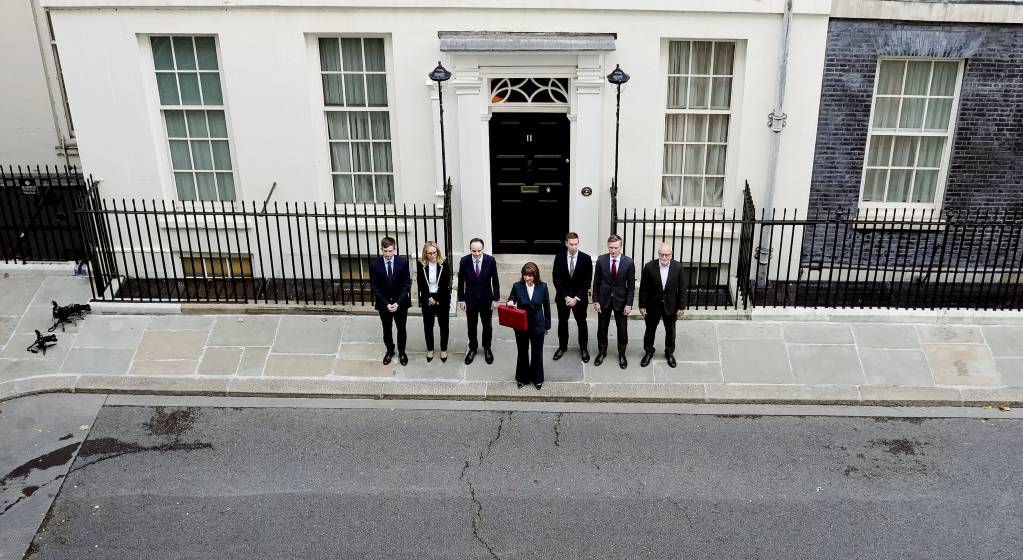
The highlights
- EVs to face new mileage-based road charge from 2028
- Electric Car Grant extended to 2030 with £1.3bn top-up
- VED Luxury car tax eased for EVs under £50K from 2026
- Fuel Duty frozen until September 2026
- Ending of the Energy Company Obligation scheme to lead to lower home charging costs
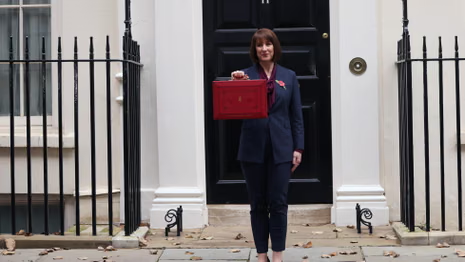
The anticipated budget has landed. If you’re a bingo fan, get your dabbers ready! For the rest of us, it wasn’t exactly a cause for celebration — in our view, there are more losers than winners this time around.
One of the biggest talking points for our industry is the 3p-per-mile charge for EVs. It’s a clear sign that electric vehicles have officially gone mainstream. With over 35 million cars on UK roads, EVs now use the same roads and motorways as everyone else, so it was only a matter of time before they were asked to “pay their way.”
That said, the government hasn’t abandoned the sector. Over the past decade, every administration has invested hundreds of millions in EV charging initiatives — from home and workplace grants to rapid-charging hubs and new-vehicle subsidies, not to mention personal tax savings. Today’s budget continues that support with more funding for EV infrastructure and purchase incentives.
In simple terms: they’ve given a lot… and eventually, we all have to give a little back. The honeymoon period was never going to last forever.
What this really shows is that EVs have grown up. They’re mainstream, and in many ways, they’re simply better than combustion-engine vehicles.
Below, we break down the key measures and what they could mean for the sector in 2025.
From 2028, EV drivers will pay a per-mile charge, adding to running costs but still lower than equivalent petrol fuel duty.
Why it’s being introduced:
The Electric Vehicle Excise Duty (eVED) is designed to replace falling fuel-duty revenue as drivers shift from petrol and diesel. The government says rates are roughly half the running-cost equivalent for petrol cars.
Industry response:
The motor and e-mobility sectors have been highly critical:
“Introducing such a system at this stage risks putting off drivers who are considering making the switch to electric by layering on new costs.” - Delvin Lane, CEO, Instavolt
“Completely the wrong time to be taxing EV drivers when they still make up only 5% of vehicles on UK roads. Loading additional barriers onto early adopters is a sure way to stall progress”. - Vicky Edmonds, CEO, EVA England
“On electric vehicles, the chancellor is driving with the handbrake on. In the OBR’s own words, this new charge is likely to reduce demand for electric cars as it increases their lifetime cost. Does she want people to buy electric cars or not?”- Ian Plummer, CCO, Autotrader
Fleets are particularly concerned:
“Zero-emission vehicles will become more expensive to acquire, operate and remarket,” warned David Bushnell, Director, Fleet Operations, “potentially leading to hundreds of thousands fewer EV sales over the forecast period.”
Indra view:
Simon Tate, CCO, Indra, said the policy shouldn't worry drivers about the UK’s commitment to EV adoption:
“The mileage-based charge simply reflects that EVs are now a mainstream part of the UK transport system. It doesn’t change the core economics: charging at home on smart tariffs remains the cheapest and most efficient way to run an EV.
The UK also continues to lead the way in Europe, recently overtaking Germany in the rate of EV uptake among major markets, clear evidence that drivers are still choosing electric when the running costs stack up.
What matters now is ensuring policy supports that behaviour. If drivers can easily charge at the right time using the right technology, EV running costs will stay well below petrol and diesel, while also supporting the wider energy system. The transition isn’t slowing, and smart home charging will only become more important over the coming years.”
£1.3 billion in additional funding extends the grant to 2030, lowering upfront costs for EV buyers and encouraging adoption.
The Budget confirmed the top-up to the Electric Car Grant, launched in summer 2025. The scheme has already supported around 35,000 new EVs, offering discounts of £1,500–£3,750 depending on sustainability criteria. The government hopes the funding will help keep EV adoption on track despite other policy reforms.
Edmund King, AA President, said:
“The AA welcomes the extra £1.3 billion for the Electric Car Grant. The grant has already helped some 35,000 drivers, and we are pleased to see efforts to speed up charger rollout and review public charging costs.”
Indra view:
Extending the grant is a strong signal of government commitment and a win for EV buyers and car makers, as upfront cost remains the biggest barrier to adoption. However, only a small subset of models (around 30–35) qualify, and just two receive the full £3,750 discount, so benefits may be uneven unless the scheme is broadened.
Raising the threshold to £50,000 means most mid- and high-priced EVs will no longer pay extra road tax.
The VED exemption for EVs ended in April 2025, with EVs over £40,000 liable for the Expensive Car Supplement (the “luxury car tax”). From 1 April 2026, the threshold rises to £50,000, so only EVs above this price will pay the additional charge.
Indra view:
This change makes more EVs accessible, balancing the need for road-tax revenue while encouraging adoption — particularly for mid-priced premium models that were previously penalised.
The budget extends the fuel duty freeze until September 2026, providing short-term relief for petrol and diesel drivers amid rising cost-of-living pressures. While welcome in the near term, once the freeze ends, any increase will strengthen the financial case for switching to electric vehicles — though it may be unwelcome for non-EV drivers.
The Indra view:
Continuing the duty freeze may make the eventual transition to broader road taxation more abrupt and politically challenging, essentially delaying the inevitable shift toward EV-friendly policies..
Ending the ECO scheme will lower household energy bills, making home EV charging cheaper.
The Chancellor confirmed the ECO scheme will end in March 2026, with legacy costs moved into general taxation. This is expected to reduce annual energy bills by around £150, with some (including Martin Lewis, founder of MoneySavingExpert) predicting a possible 3–4p per kWh reduction.
For EV drivers, lower electricity costs are an indirect but welcome boost, helping to offset rising motoring taxes and keep the total cost of ownership competitive.
Indra view:
Shifting ECO costs into general taxation is a subtle but positive step for EV owners. Cheaper energy makes home charging — especially off-peak — more cost-effective, reinforcing the financial case for EV adoption while easing household bills.
Simon Tate, Chief Commercial Officer at Indra, summed it up:
“All of this puts a spotlight on the importance of home charging. If drivers want to keep running costs low, smart tariffs and intelligent charging are the way forward, potentially saving hundreds of pounds every year. But that starts with having the right charger.
At Indra, our chargers already support the widest range of smart tariffs out there, helping drivers unlock meaningful savings with ease. And there’s plenty more innovation on the horizon, from energy-flex services to bi-directional charging in 2026. By the time the mileage-based tax lands in 2028, bi-directional will be well underway, and many more vehicles will support it.
The bigger picture is this: the budget's announcement shouldn’t put new EV drivers off, quite the opposite. The total cost of ownership is still firmly in EVs’ favour, especially for those who charge smartly at home.
Of course, the devil will be in the detail, particularly around how the pay-per-mile system will be implemented. That will come out in due course. But for now, the direction of travel remains clear: EVs are here to stay, the market is maturing, and smart EV home charging will be more important than ever."
View our range of smart chargers and discover more about owning and driving an EV in our knowledge hub.
1Based on an average annual mileage of 7,000 miles
2Based on switching from a Seat Ateca 1.5 TSI EVO SE 5-Door to a Kia Niro 2, driving annual mileage of 7,000 miles: charging with standard dual rate tariff EON Next dual rate tariff vs Smart EV tariff (OVO Charge Anytime) at 7p/kWh vs cost of petrol at 137p/litre. Data as of 27 November 2025.
 | About the author: Sonya joined Indra in July 2025 as Senior Content and Marketing Executive. She is a content writer with many years of experience who is now using her expertise to help Indra communicate their branding, products, and the benefits of EV driving for both individuals, society and the planet. |