








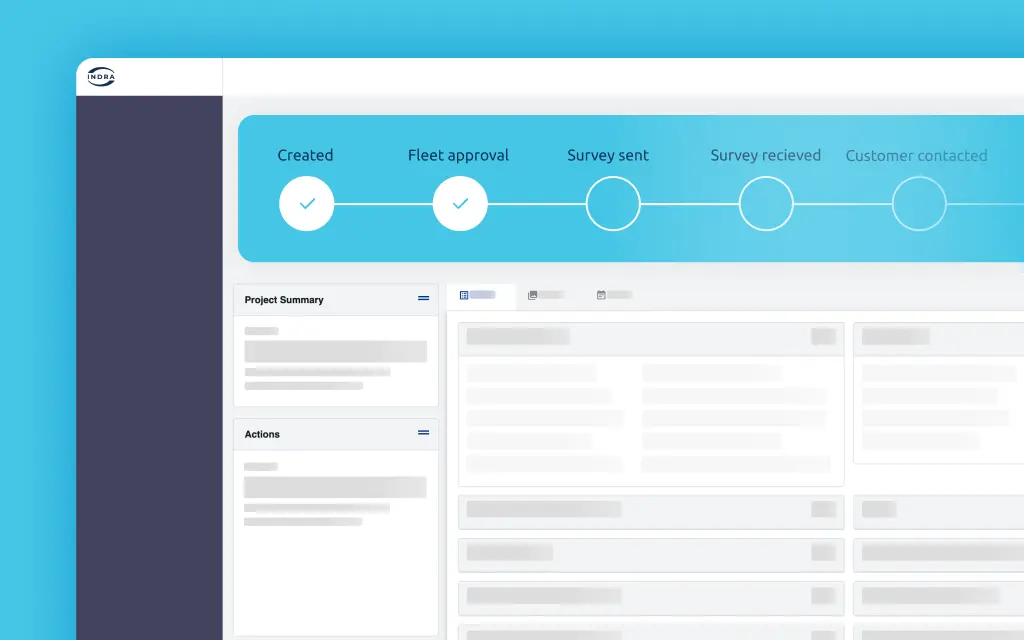
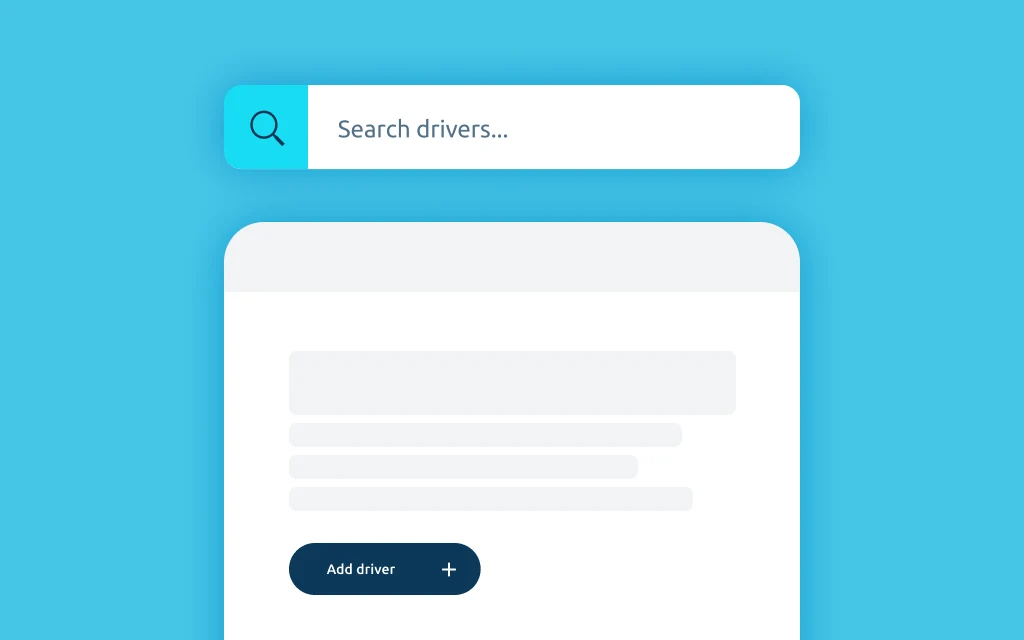
Stay in control of your home charging rollout through the fleet manager portal. Approve drivers, manage costs, filter by status and search by driver — all in one place.
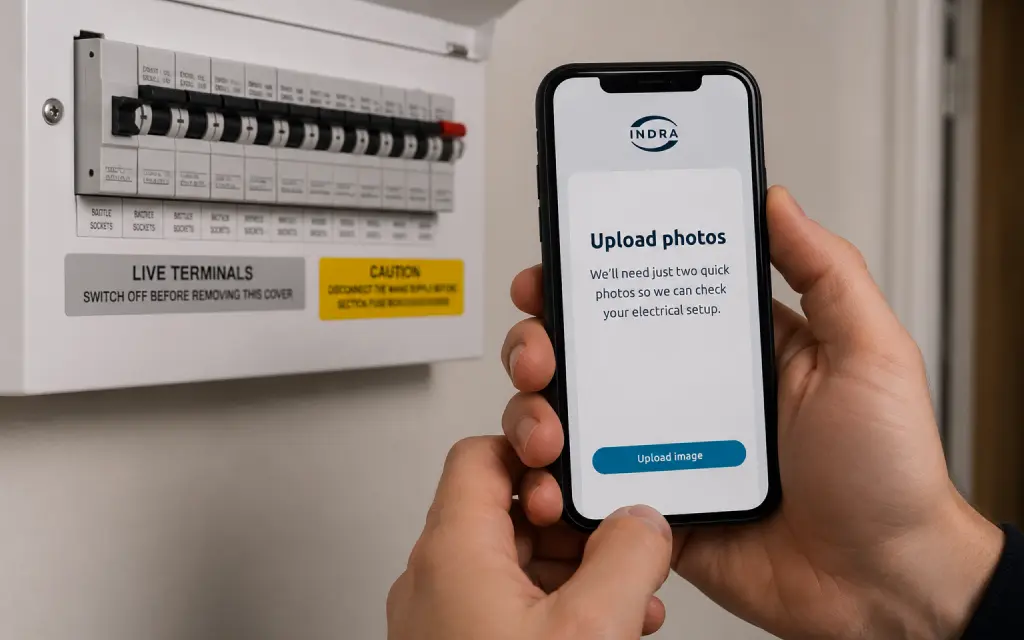
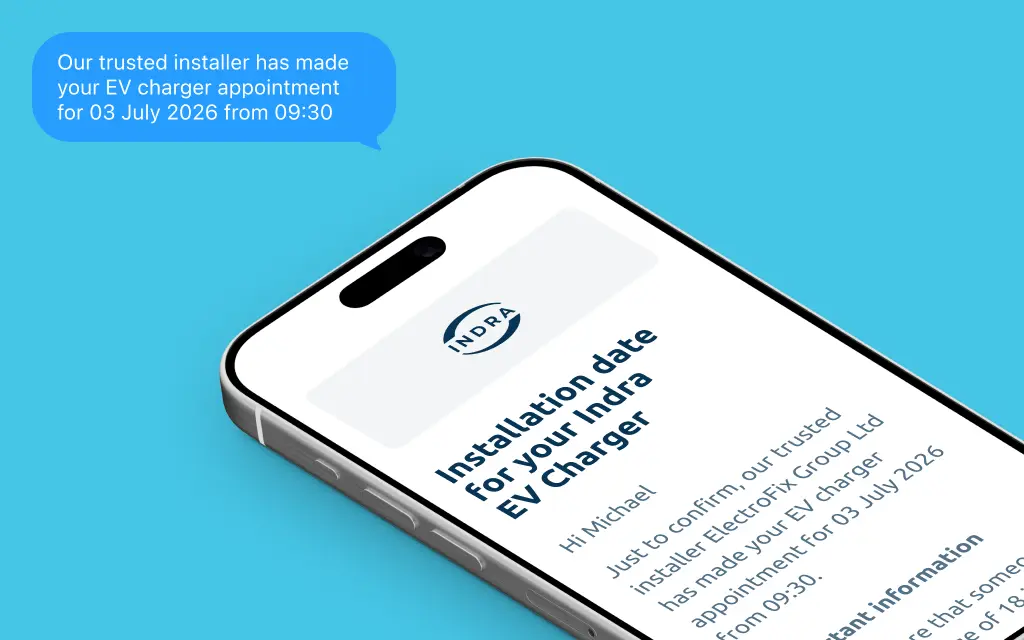
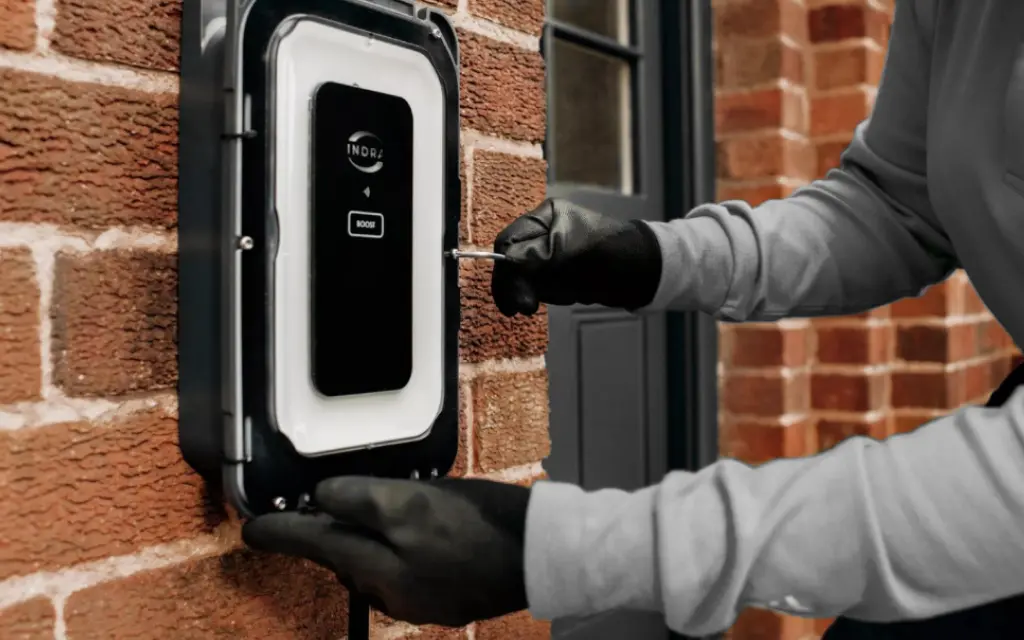
We make home charger installation straightforward, from driver details and online home survey through to DNO management, installation, sign-off certificates and support. Drivers are guided throughout, while Indra manages the detail.
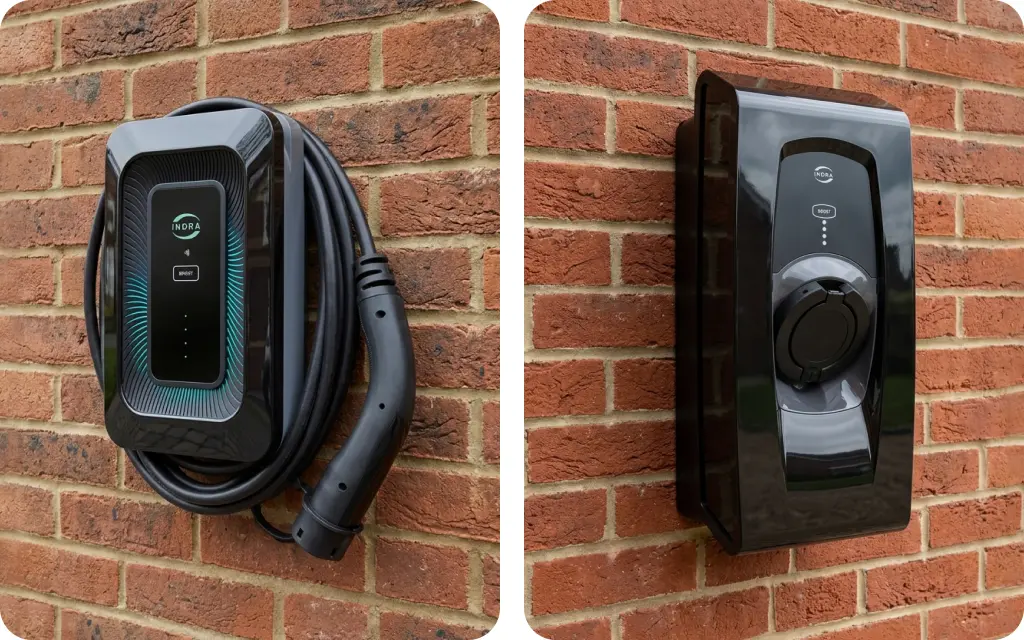
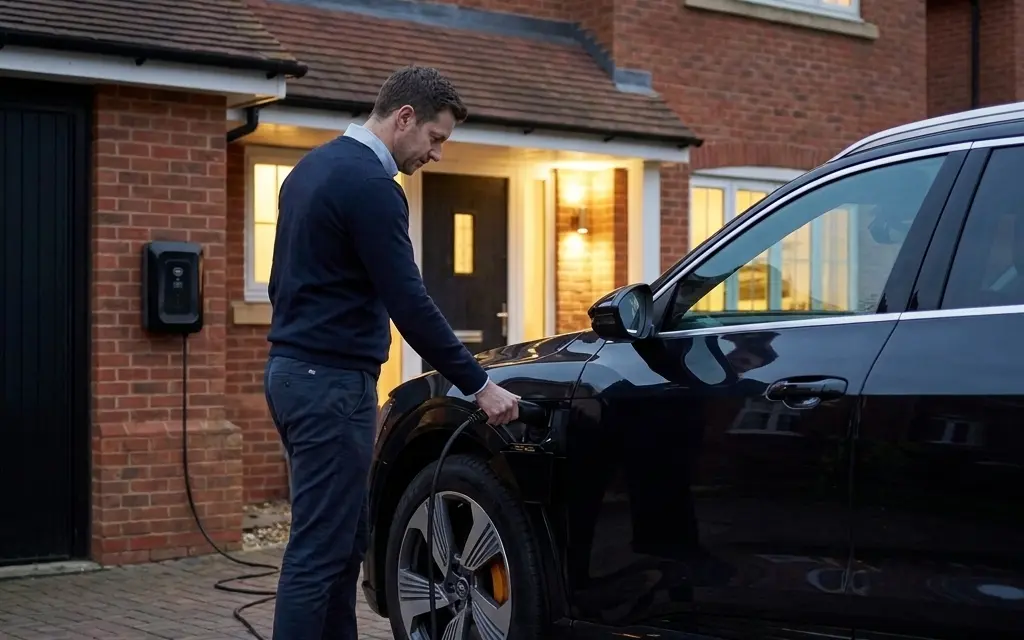
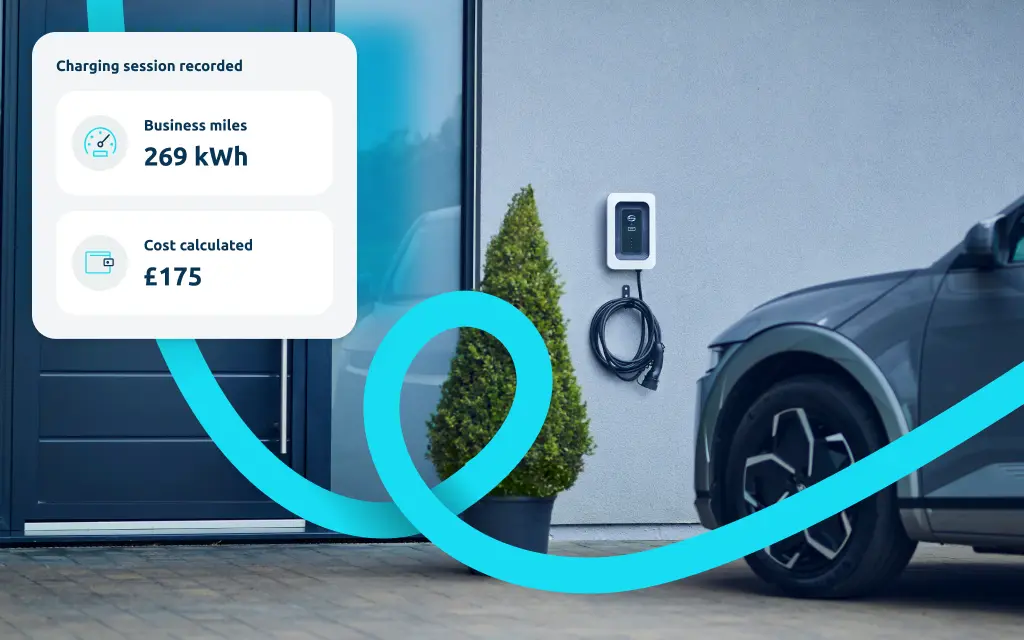
Our home chargers are designed to make fleet electrification simple, flexible and cost-effective for drivers.
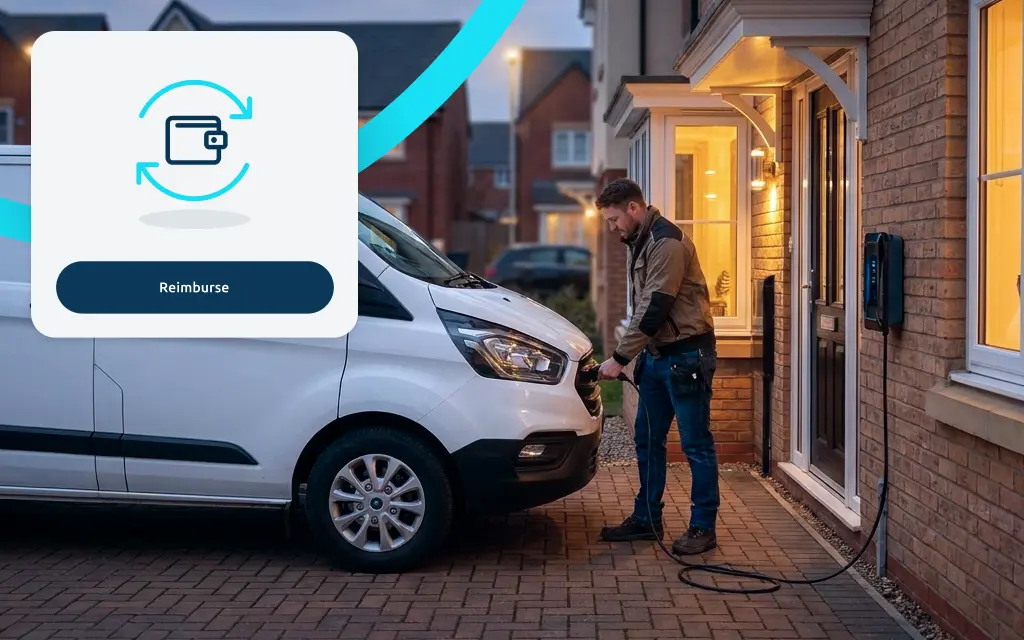
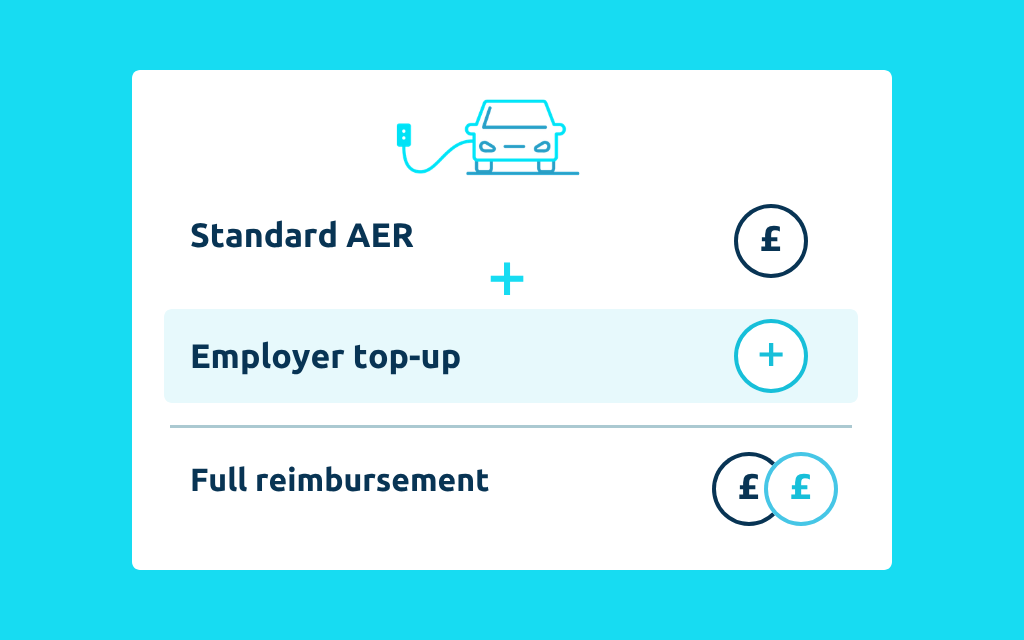
Business charging costs are calculated accurately and paid directly to the driver’s energy supplier — removing the need for manual claims, receipts or reimbursement calculations.


Have a question or challenge with your Fleet? Email us directly to get personalised insights and practical advice.
"*" indicates required fields
Yes, it can. Home charging is typically much cheaper than using the public charging network. According to the Zapmap Price Index for August 2026, the average pay-as-you-go price for rapid and ultra-rapid public charging was 77p/kWh, compared with around 26p/kWh on a standard domestic tariff and approximately 8.5p/kWh on a typical off-peak EV tariff.
This means rapid public charging can cost around three times more than standard home charging—and potentially nine times more than charging overnight on an EV tariff.
A fleet-at-home approach can also help reduce downtime. Instead of drivers having to stop and charge during the working day, vehicles can be charged overnight at home, helping keep drivers on the road and reducing reliance on more expensive public charging.
Home charging works best for drivers with off-street parking, vehicles that are kept at home overnight and driving patterns that allow enough time for overnight charging.
It is less suited to depot-based vehicles, drivers without access to a private driveway or home energy supply, or vehicles that need rapid charging during the working day.
A successful Fleet-at-Home rollout starts with understanding each driver’s home setup and daily vehicle usage.
No. Drivers do not usually need to switch energy supplier to take part in a Fleet at Home programme.
The charger can work with the driver’s existing home energy supply, while the reimbursement platform your business chooses uses charging data to calculate eligible business charging costs. This means drivers can continue with their current energy provider, while your business can still manage reimbursement accurately and consistently.
Some drivers may choose to move to an EV-friendly tariff to reduce their charging costs, but this is not normally a requirement.
This depends on your company policy and the commercial arrangement you choose to put in place.
For most fleet-at-home programmes, the business pays for the charger and standard installation, helping remove upfront cost for drivers and making the rollout easier to manage at scale.
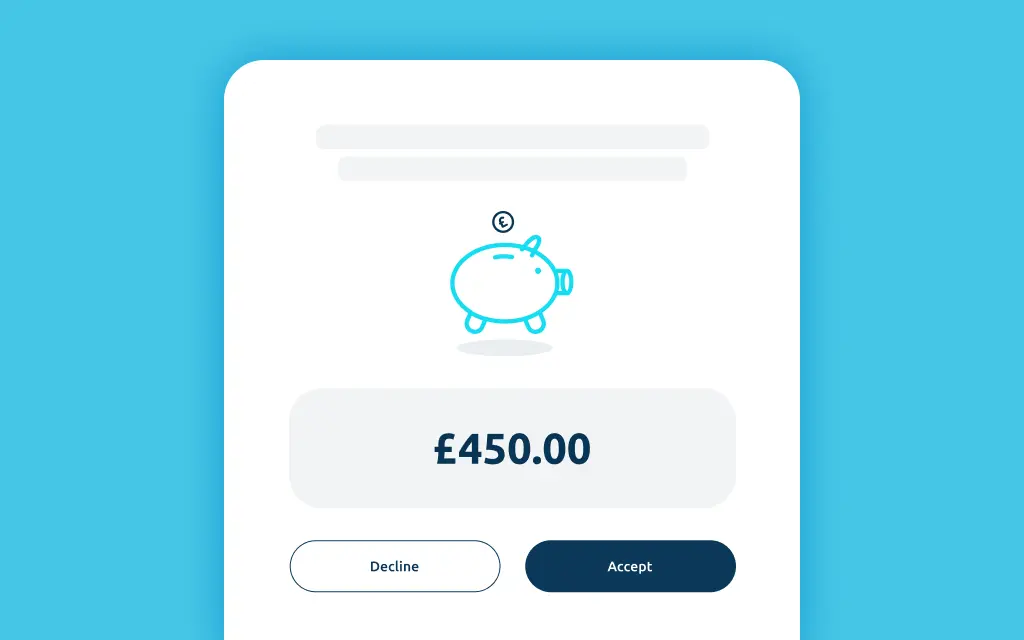
If a driver’s home requires additional work beyond a standard installation, this will be identified during the guided home survey and flagged to the fleet manager through the Fleet at Home portal. The fleet manager can then review the additional cost and decide whether to approve or reject the work.
Depending on your company policy, additional costs may be covered by the business, passed to the driver, or the driver may be omitted from the scheme if the installation is not suitable or commercially viable.
This gives your business control over installation costs while keeping the process clear for drivers
If a driver already has a compatible home charging installation, Indra can replace the existing charger through our Charger Upgrade Programme.
The programme includes:
If the existing installation requires any additional electrical work beyond a standard charger replacement (for example, cabling upgrades, remedial electrical works or compliance improvements), these will be identified during the installation review. Any additional work will be discussed and approved by the customer before proceeding.
This does not usually prevent a driver from taking part in a Fleet-at-Home programme. If a household has a company EV and a personal EV, or more than one company vehicle, the key requirement is that eligible business charging can be identified separately from personal charging.
Where supported, platforms such as Allstar Homecharge offer Multi EV Mode, allowing drivers to label charging sessions by vehicle or usage type. In this setup, charging sessions can default to personal unless marked as business, helping ensure only eligible company vehicle charging is reimbursed.
Fleet managers can also enable or disable this feature on a per-driver basis.
Other reimbursement platforms take a similar approach. TMC can use charge point, mileage and telematics data to calculate reimbursement based on business and private usage, while Rightcharge allows charging sessions to be marked as Business or Personal where manual reporting is required, with automatic detection available in some setups.
This means other EVs can still be charged at the property, while the reimbursement process remains focused on the company vehicle and eligible business charging only.
Lead times can vary depending on the driver’s home setup, how quickly they complete their guided mobile survey, any approval steps required by your business and whether additional electrical work is needed.
As a guide, most installs are completed within a month, although some installations may take longer where fleet approval processes, vehicle delivery dates or more complex installation requirements are involved.
Fleet managers can track each driver’s progress through the Indra Fleet-at-Home portal, making it easier to see where each installation has reached and identify any actions needed to keep the roll-out moving.
Not every property will be suitable for a standard home charger installation. This may be due to factors such as no off-street parking, limited access to the driver’s own electricity supply, electrical constraints at the property, or installation requirements that fall outside a standard setup.
As part of the Fleet-at-Home journey, the driver completes a guided mobile survey, which helps assess whether their property is suitable before an installation is arranged. If additional work is needed, this will be flagged to the fleet manager through the Indra Fleet-at-Home portal.
The fleet manager can then review the situation and decide whether to approve any additional work, ask the driver to contribute to the cost, or omit the driver from the home charging scheme if the installation is not suitable or commercially viable.
Where home charging is not possible, your business may choose to support the driver through an alternative approach, such as public, workplace or depot charging, depending on your fleet policy and chosen charging partners.
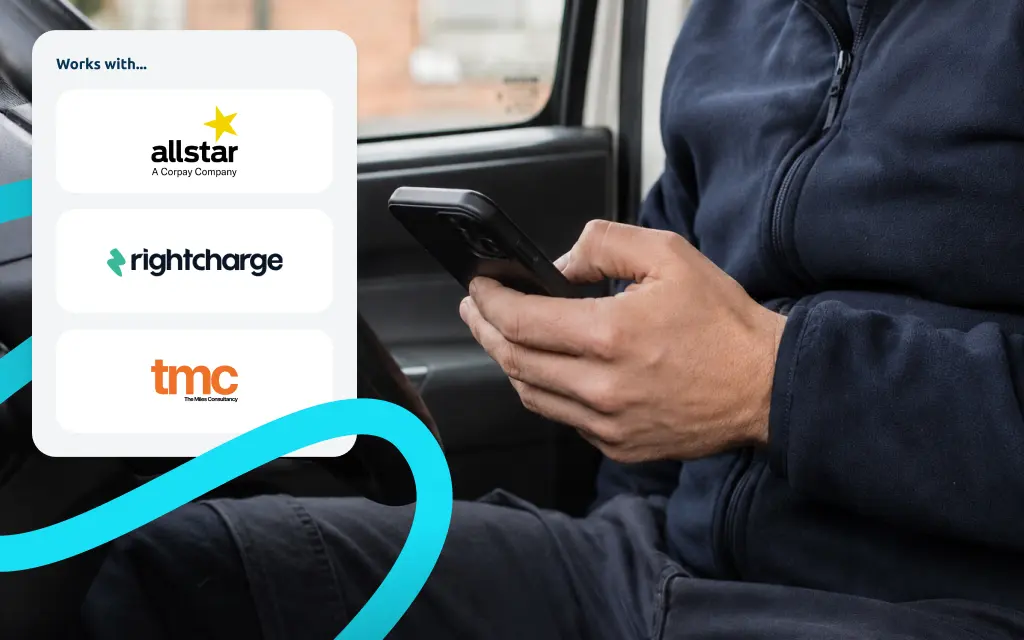
Our solution works with leading reimbursement platforms including Allstar, Paua, Rightcharge and TMC. These platforms use charger, vehicle, tariff and mileage data to help calculate eligible home charging costs accurately and automatically. Reimbursement can then be applied directly to the driver’s energy account, reducing manual claims for drivers while giving the business clear reporting and consolidated billing.
Business and personal charging are separated through the reimbursement platform selected by your business.
Using charging data from the home charger, the platform can help identify eligible business charging and calculate the correct reimbursement for the driver.
Personal charging is not treated as a business expense, helping keep reimbursement accurate, transparent and easier for fleet and finance teams to manage.
Yes. Fleet-at-Home can work alongside public charging, depending on the reimbursement or charge-card platform your business chooses to use.
For example, Allstar Chargepass supports public charging, home charging, reporting and admin in one solution, with Allstar Homecharge available for home charging reimbursement. TMC can include domestic, workplace and public charging when calculating driver reimbursement, and also offers an EV charge card for public charging. Rightcharge allows businesses to choose home charging, public charging, or both, with one card and app for public charging, automated home reimbursement, a single bill and centralised reporting.
This means drivers can charge at home where it is practical and cost-effective, while still having access to public charging for longer journeys, top-ups during the working day, or situations where home charging is not available.
The right setup will depend on your fleet policy, driver needs and chosen reimbursement partner.
Yes. Fleet managers can use the Fleet-at-Home portal to track key installation and on-boarding activity, helping them see how each driver is progressing through the setup process.
Charging and reimbursement data is then managed through the reimbursement platform your business chooses to use, such as Allstar, TMC, Paua, Rightcharge or another provider. Depending on the platform, this can include charging session data, home and public charging costs, reimbursement information, vehicle-level reporting and carbon data.
This gives fleet and finance teams a clearer view of driver setup, charging behaviour and ongoing costs, without relying on manual updates, household electricity bills or spreadsheet-based claims.
Every Indra charger is backed by a 3-year manufacturer’s warranty, with the installation covered by a 1-year parts and labour warranty. We’ll continue to support your drivers’ chargers with product updates and warranty support, helping minimise disruption.
Once the warranty period ends, ongoing support may be available on a pay-as-you-go basis.
If a driver leaves, they can be removed from the reimbursement platform your business uses, such as TMC, Paua, Rightcharge, Allstar or another provider, so that home charging reimbursements stop from the agreed date.
What happens to the charger itself will depend on your company policy and the arrangement you have in place. In some cases, the charger may remain at the property for the driver’s personal use; in others, ownership may be transferred or the charger may be removed or reassigned.
We recommend agreeing this policy upfront as part of your fleet-at-home rollout, so there is a clear process for drivers, fleet teams and finance teams.