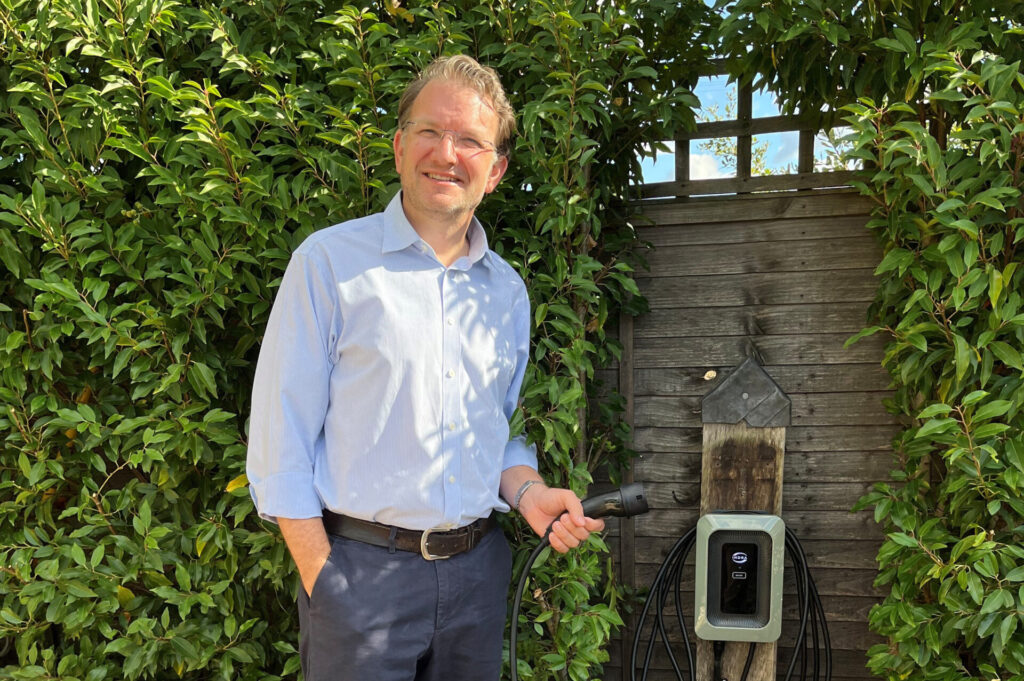
In our customer stories series, we shine a spotlight on Indra drivers and the real-world benefits they’ve discovered from charging smarter at home.
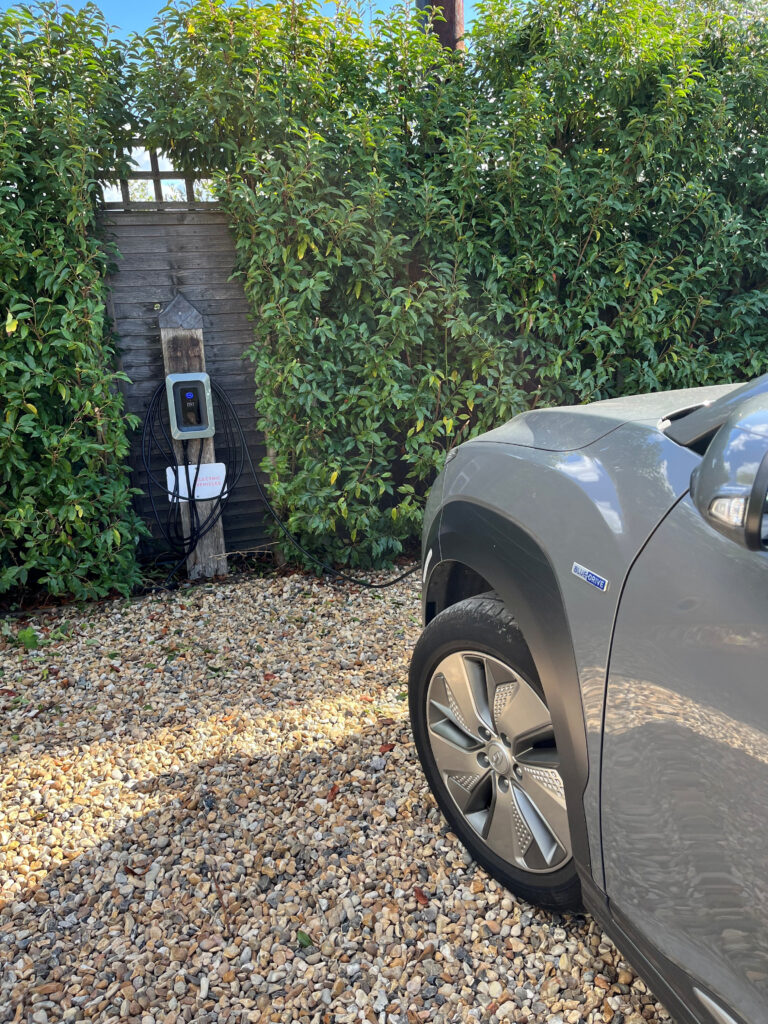
Meet Graeme Cooper, an expert in the field of energy, infrastructure, clean transport and heat. An experienced international business professional with decades spent working in the power, energy market and utilities sector and an Indra EV charger user and EV driver since 2017. We went to meet him at his 600-year-old, Grade II listed, carbon-neutral home for the upgrade of his Indra charger from PRO to LUX.
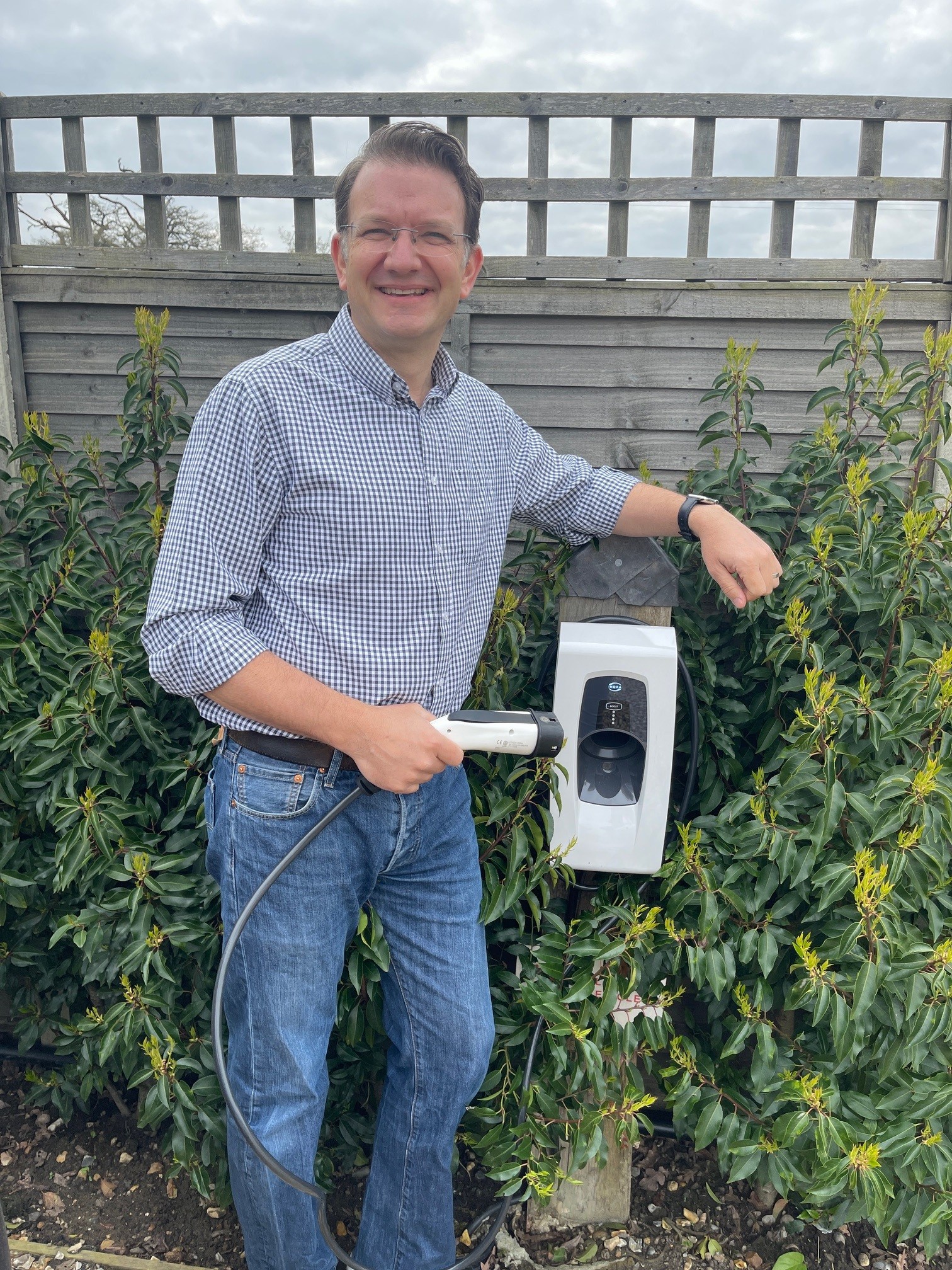
When Graeme had his Indra Smart PRO upgraded to a Smart LUX, we went to chat to him about all things to do with EVs, chargers, electrification of transport and energy.
Graeme told us, “I grew up with petrol cars and I'd had every kind of GTI, V6, turbocharged car, you name it, I'd kind of done my car history.
I was of the opinion that: EVs have a slightly strange look, and I'd want to drive 600 miles without stopping, and they are so quiet, you don't need to put on a radio to distract you from the drone of the engine... But then, I'd got to the point where I was working for National Grid and I was leading the work on decarbonising transport, and I found myself in a strange position, where you can't be 'the EV guy' at National Grid and not have an EV.
At the time, the company car scheme didn't have any EVs on it, so I ended up leasing my own Tesla and busting my own myths. Now all of my commuting, shopping and all that stuff is done electric because the technology is just better."

"Well, I got over range anxiety in about four days, but I also learned more about kilowatts and kilowatt hours in those four days than I did in twenty years in the energy business. You end up going through a whole learning process, and one of the best things you can do is to show by doing.
I commuted from here in Berkshire into Central London every day for four days, and it cost me £2 in electricity, whereas before I was spending nearly £30 per day on a return train ticket, and it was taking me the same time.
So I worked out that just the avoided train ticket would have cost more than leasing a car. So, once you've done that and busted your own myth, then surely you realise it's the only answer.
To start with, you don't really have a conception of what a kilowatt-hour means. You fill the battery for seven pounds something, but when you get the distance perception, such as 'that's to my granny's and back', then you really understand what a kilowatt hour is. In the same way, whatever the rating of the motor had was meaningless, until the minute you hit the 'go' pedal and you do 0-60 in 4.6 seconds, you then go "Now I understand what it is!".
"The thing with an EV is the torque. When we first had turbo diesel, people were like, "Wow, I can really feel the torque, it feels so sporty!" But with an electric car, you get all of that torque from the second you start moving.
It's genuinely quite quick and fun to drive, and you can actually hear the impact of the torque.
In a combustion car, you can hear the noise of the air being sucked in, squeezed and exploded, which masks other noises, but with an EV, you can actually hear the impact of the torque, and how hard the tyres are working. It's not bad or good, it's just different."
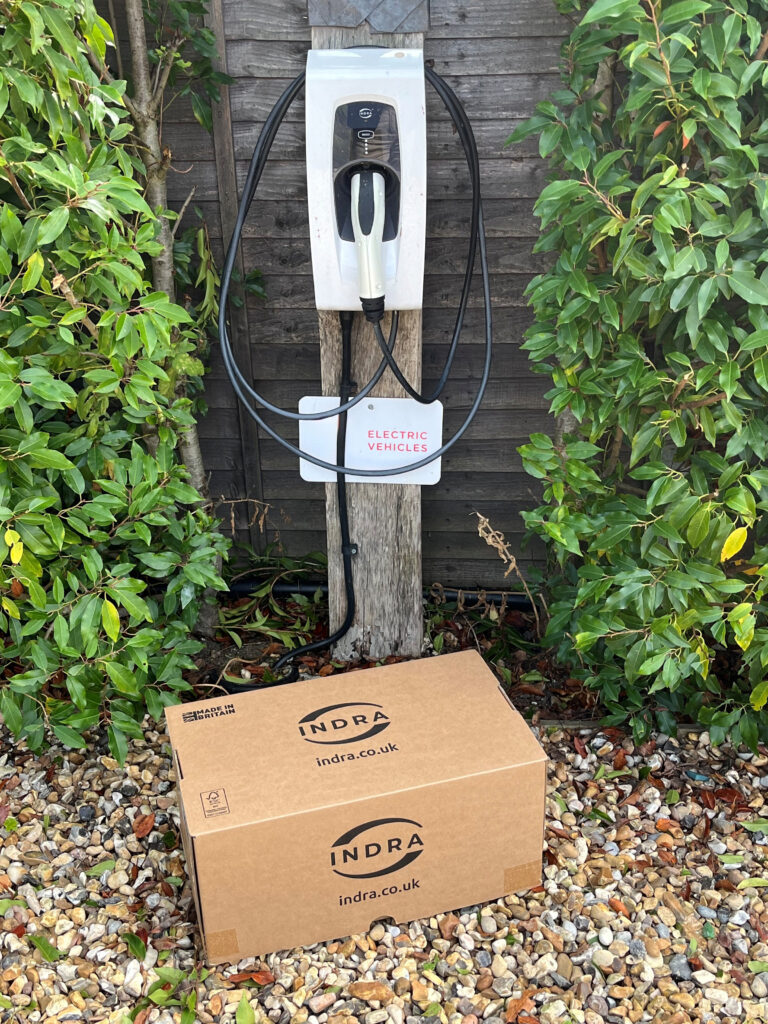
"When I started with an EV in 2017, we just plugged a 'granny lead' into a socket, and then I went to the Smart PRO. At that point, I thought, 'I've seen the future, and it's here now, this is just so brilliant.' But then you realise that was the first range of the really smart chargers.
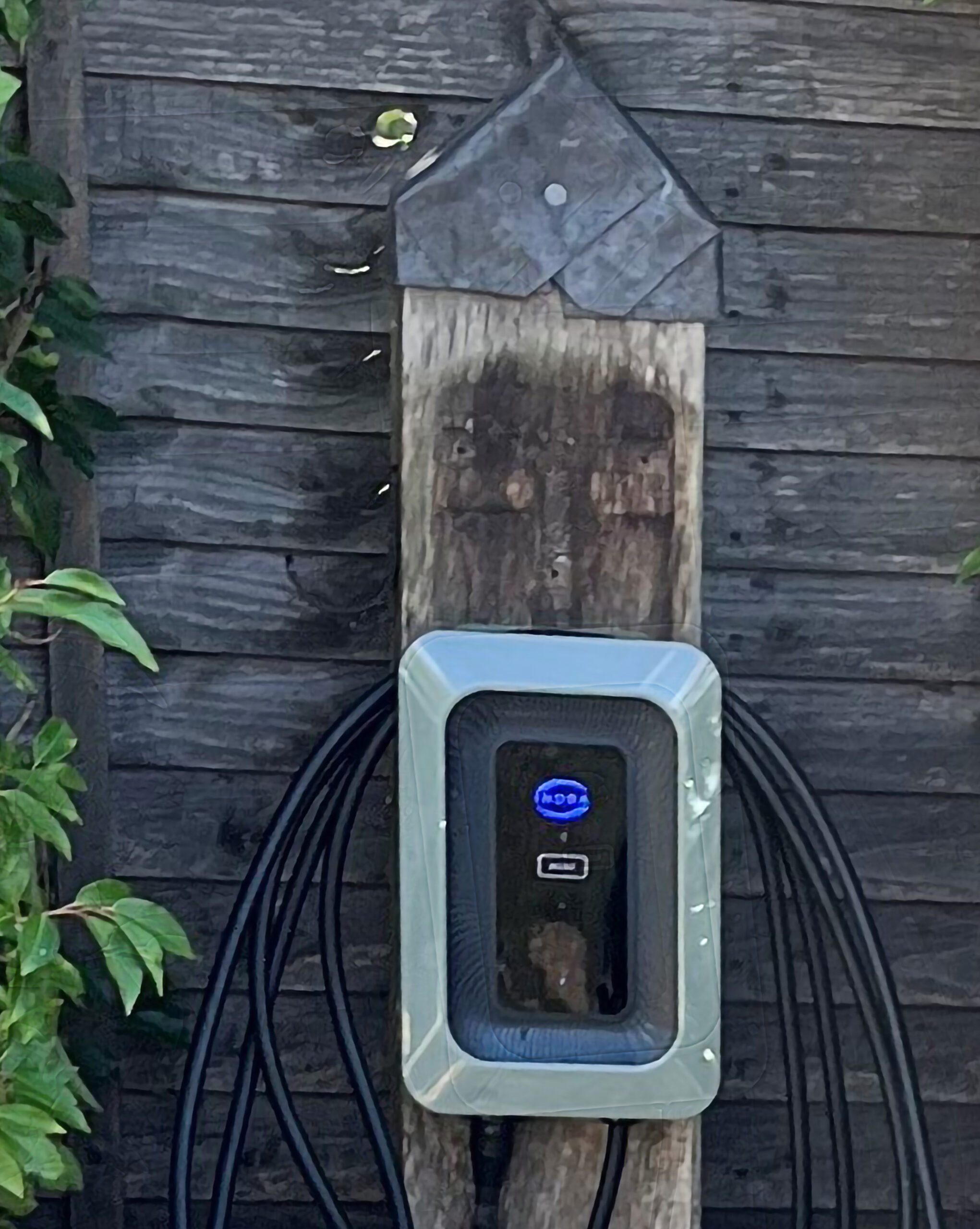
Learning has really driven so much innovation. But then I was at the launch of the LUX. They pulled off the cover, and the charger was in a water tank. I mean, you're never going to put your charger in a water tank, but what that proved beautifully is that you could engineer a piece of electronics that could withstand that, and the weather. And I thought, 'Okay, that's pretty good for me!'
As an early adopter, I've been on an evolution from dumb charger, to smarter, to smartest."
"Well, it's really actually about how you use the car. Because, after three hours of driving, which on a good day let's call just less than 200 miles, you probably should be stopping anyway. Just for a cup of coffee, a comfort break, to stretch your legs and re-engage with the process of driving.
So, as long as you've got enough chargers at enough speed, you only need a 200-mile range.
Arguably, the biggest range anxiety is bladder range. I mean, how far can you drive before you physically have to stop? If you can charge a car in the time it takes you to wander in, find the rest rooms, get a coffee and then get back to the car, then anything around 200 miles is probably not far off."
"It's still a British-built product, and in a world of geopolitics, this is great. The fact that we can build something here, so well, that's built to a standard, why wouldn't you want to buy it?
There's something about a circular economy whereby you're using British pounds to buy a British product that pays British employees to have a job. There's something quite poetic about actually caring where things come from."
"Well, when people make the journey into getting an EV, it's a level of education. It opens up all these questions. Such as, 'Well, I'm paying somebody for electricity, can I generate my own more cheaply?' leading to examining the options of solar and heat pumps. But they wouldn't have asked that question if they didn't have an EV.
Now they understand what the electricity bill looks like. They understand that it's gone up because they're charging a car, but their credit card bill has gone down because they're no longer putting petrol or diesel in the car.
For a long time, energy generation has gone up and down to meet demand, whereas when you electrify and use energy efficiently, when it's spare, you're helping the generation system not to have to ramp up and down. So all these cars are actually as much a benefit as they are a problem. It's just a new demand and a movable demand.
When people say the cost of energy only goes up, I'd say that arguably free fuel, or at least a majority free fuel from solar or wind sources, if we can use that really intelligently and efficiently, you end up with an overall cheaper, cleaner energy system.
Making electricity was the dirtiest thing we did in the UK, but over the last 20 years it's now become very, very clean and getting cleaner every day. So you realise that it's a myth that 'I'm plugging in an EV and it's being powered by coal'.
The nice thing about electricity is you can, if you own your own home, stick a solar panel on the roof and generate your own. You can choose whether that power goes into your house or your car. So, what you've ended up doing is giving people the ability to democratise energy.
You can be part of the process, and if you're part of the process, then you can choose to either opt in and be really smart, or choose not to be smart at all and just not care."
If you're considering taking control of your electricity consumption and saving money on your bills, then making the first step by investing in an EV and a smart charger is a no-brainer.
With ever-growing public charging infrastructure and government grants to help with buying an EV and even fit a pavement gully where homeowners don't have off-street parking, more and more people are choosing to go for cleaner, greener transport with a monthly drop in their transportation budget.
Why not join them? Check out our range of smart chargers to help you gain the best EV charging rates.
 | About the author: Sonya joined Indra in July 2025 as Senior Content and Marketing Executive. She is a content writer with many years of experience who is now using her expertise to help Indra communicate their branding, products, and the benefits of EV driving for both individuals, society and the planet. |